

Introduction
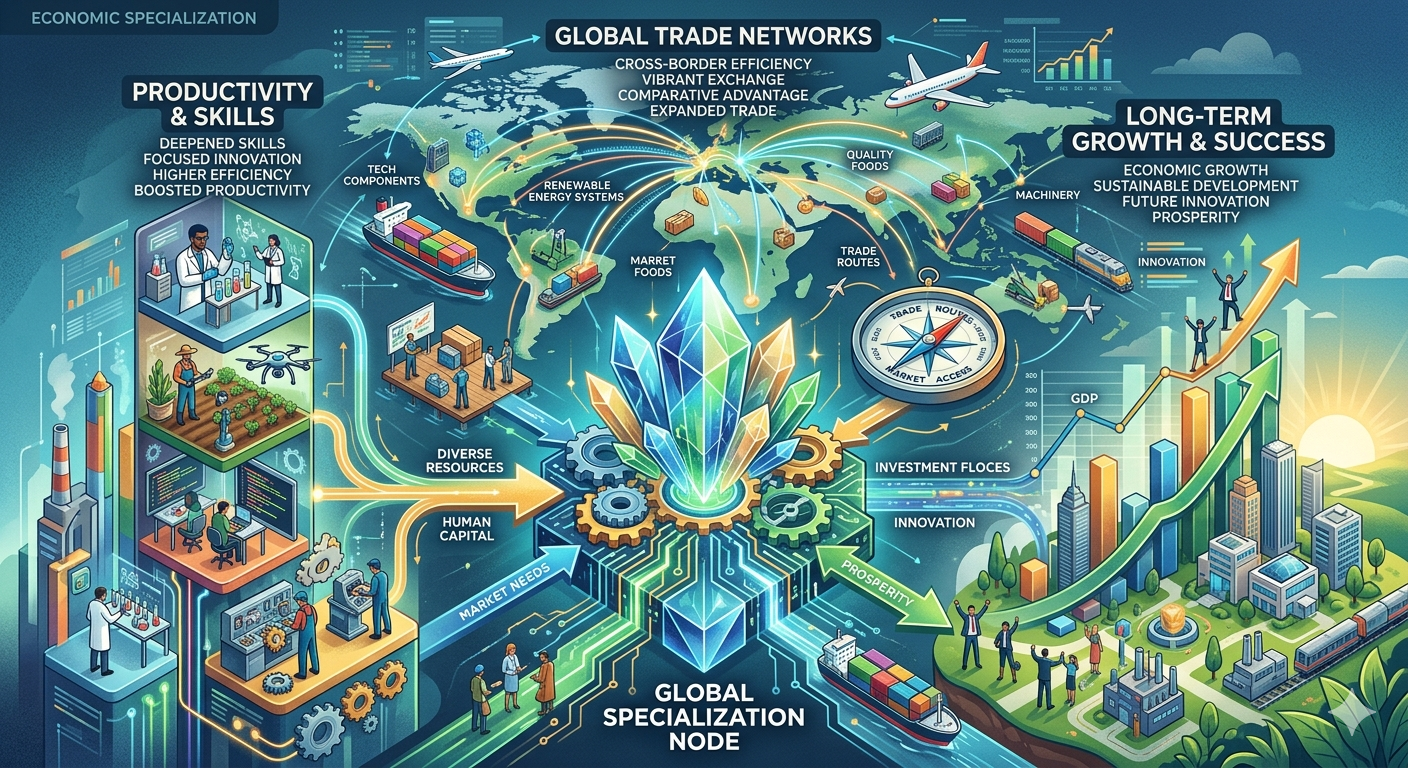
Economic specialization is one of the most important concepts behind modern economic growth. From small businesses focusing on niche products to countries producing goods they can create more efficiently, specialization shapes how economies function and compete.
Without specialization, modern industries would struggle to produce products efficiently, businesses would face higher costs, and global trade would become significantly slower.
Today’s economy depends heavily on specialization. Workers specialize in careers, companies specialize in industries, and countries specialize in producing certain goods and services. This system allows resources to be used more effectively and helps increase productivity.
As globalization, technology, and digital markets continue expanding, understanding economic specialization has become increasingly important for businesses, investors, students, and consumers.
This article explains what economic specialization means, how it works, its advantages, disadvantages, real-world examples, and why it remains a major force behind economic development.
What Is Economic Specialization?
Economic specialization refers to the process where individuals, businesses, regions, or countries focus on producing specific goods or services rather than attempting to produce everything themselves.
In simple terms:
Specialization means concentrating resources and effort on activities where efficiency is highest.
Examples include:
- A software company focusing only on cloud computing
- A farmer specializing in corn production
- A country producing goods where it has competitive advantages
- Workers developing expertise in specific professions
Specialization allows productivity improvements because repeated experience increases efficiency.
Why Economic Specialization Matters
Specialization affects nearly every part of modern economies.
It helps create:
- Higher productivity
- Lower production costs
- Better resource allocation
- Faster innovation
- Increased trade opportunities
Without specialization, many products would become more expensive and less accessible.
How Economic Specialization Works
Economic specialization generally follows a simple process.
Step 1: Identify Strengths
Individuals or organizations identify areas where they perform most efficiently.
Step 2: Allocate Resources
Resources are concentrated toward those strengths.
Step 3: Increase Production Efficiency
Repeated production improves productivity.
Step 4: Trade With Others
Specialized producers exchange products and services with others.
Step 5: Expand Economic Activity
Specialization increases overall output and economic growth.
Types of Economic Specialization
Specialization exists at multiple levels.
Individual Specialization
Workers specialize in particular skills or professions.
Examples:
- Doctors
- Engineers
- Accountants
- Software developers
Professional specialization increases expertise.
Business Specialization
Companies focus on specific products or services.
Examples:
- Technology companies
- Manufacturing firms
- Financial institutions
Focused businesses often operate more efficiently.
Regional Specialization
Different regions often specialize based on available resources.
Examples include:
- Agricultural regions
- Industrial centers
- Technology hubs
National Specialization
Countries frequently specialize according to economic strengths.
Some nations focus on:
- Manufacturing
- Agriculture
- Financial services
- Technology
International trade relies heavily on this form of specialization.
Historical Development of Economic Specialization
Specialization is not a new concept.
Early economies were largely self-sufficient.
Over time:
- Trade expanded
- Industries developed
- Labor divisions increased
- Production became more complex
The Industrial Revolution accelerated specialization dramatically by allowing workers and machines to perform narrow tasks more efficiently.
Modern globalization further increased specialization across countries.
Economic Specialization and Division of Labor
Division of labor and specialization are closely connected.
Division of labor means breaking production into smaller tasks.
Examples:
- Assembly line manufacturing
- Software development teams
- Construction projects
Benefits include:
- Faster production
- Improved skills
- Greater efficiency
Specialization often emerges naturally when labor becomes divided.
Benefits of Economic Specialization
Specialization creates multiple economic advantages.
Increased Productivity
Specialized workers perform tasks faster and better.
Higher productivity allows more output using fewer resources.
Lower Production Costs
Efficiency reduces expenses.
Lower costs often create:
- Lower prices
- Higher profits
- Greater competitiveness
Better Skill Development
Repeated practice improves expertise.
Skilled workers usually produce higher-quality results.
Encourages Innovation
Specialized industries often invest heavily in research and development.
This leads to:
- New technologies
- Better products
- Improved processes
Supports Global Trade
Countries exchange specialized products rather than producing everything domestically.
Trade increases economic opportunities.
Economic Specialization in the United States
The United States economy demonstrates specialization extensively.
Examples include:
Technology
Large technology industries focus on software, cloud services, and digital innovation.
Agriculture
Certain states specialize in specific crops and agricultural production.
Financial Services
Financial centers support banking, investing, and corporate finance.
Manufacturing
Different regions focus on specialized manufacturing industries.
This specialization contributes significantly to economic productivity.
Comparative Advantage and Specialization
Comparative advantage explains why specialization works.
The concept suggests:
Countries should specialize in products they produce relatively more efficiently.
Benefits include:
- Greater production
- Better trade outcomes
- Increased economic welfare
Comparative advantage remains one of the foundations of international trade theory.
Challenges and Risks of Economic Specialization
Despite advantages, specialization also creates risks.
Overdependence
Relying heavily on one industry creates vulnerability.
Examples:
- Commodity price crashes
- Industry decline
- Economic disruptions
Labor Market Risks
Highly specialized workers may struggle when industries change.
Supply Chain Vulnerability
Specialization increases dependence on external suppliers.
Disruptions can create shortages.
Regional Economic Imbalances
Some regions may benefit more than others.
Technology and Economic Specialization
Technology accelerates specialization.
Examples include:
- Automation systems
- Artificial intelligence
- Digital marketplaces
- Cloud infrastructure
Technology allows businesses to focus on narrower, highly specialized functions.
Globalization and Specialization
Globalization dramatically increased specialization.
Today:
- Companies source internationally
- Countries export specialized goods
- Consumers access global products
Global specialization has increased efficiency but also increased economic interdependence.
Economic Specialization in Modern Industries
Modern industries rely heavily on specialization.
Examples:
Healthcare
Medical professionals specialize in different fields.
Manufacturing
Production systems divide work into highly specialized processes.
Technology
Companies specialize in software, hardware, cybersecurity, and cloud systems.
Finance
Financial institutions focus on specialized services.
Future Trends Shaping Economic Specialization
Several trends will influence specialization.
Artificial Intelligence
AI may create new specialized industries.
Automation Expansion
Automation increases efficiency in specialized production.
Digital Work Growth
Remote work allows specialized talent to work globally.
Sustainable Industries
Environmental challenges create new specialization opportunities.
How Businesses Use Specialization to Grow
Businesses improve competitiveness through specialization.
Strategies include:
- Focusing on niche markets
- Developing expertise
- Creating specialized products
- Improving operational efficiency
Specialization often helps smaller businesses compete against larger organizations.
Why Economic Specialization Will Remain Important
Modern economies continue becoming:
- More complex
- More digital
- More interconnected
- More competitive
Specialization helps manage complexity and improve efficiency.
As industries evolve, specialization will likely become even more important.
Conclusion
Economic specialization is one of the most powerful forces behind productivity, trade, innovation, and economic growth. By focusing resources on specific activities, individuals, businesses, and countries can improve efficiency and create greater value.
From specialized workers and companies to global supply chains and international trade, specialization influences almost every aspect of modern economic life.
Although specialization creates risks such as dependency and market vulnerability, its advantages continue driving economic development worldwide.
As technology, globalization, and digital transformation continue reshaping economies, specialization will remain a critical component of future growth.
Understanding economic specialization therefore provides valuable insight into how modern economies function and why productivity continues improving over time.
Frequently Asked Questions
What is economic specialization?
Economic specialization means focusing resources on producing specific goods or services more efficiently.
Why is specialization important?
It increases productivity, lowers costs, and supports economic growth.
How does specialization affect trade?
Countries exchange specialized products, increasing global commerce.
What are the disadvantages of specialization?
Risks include overdependence, labor market challenges, and supply chain vulnerability.
Does specialization increase productivity?
Yes, repeated experience and focused production generally improve efficiency.

