

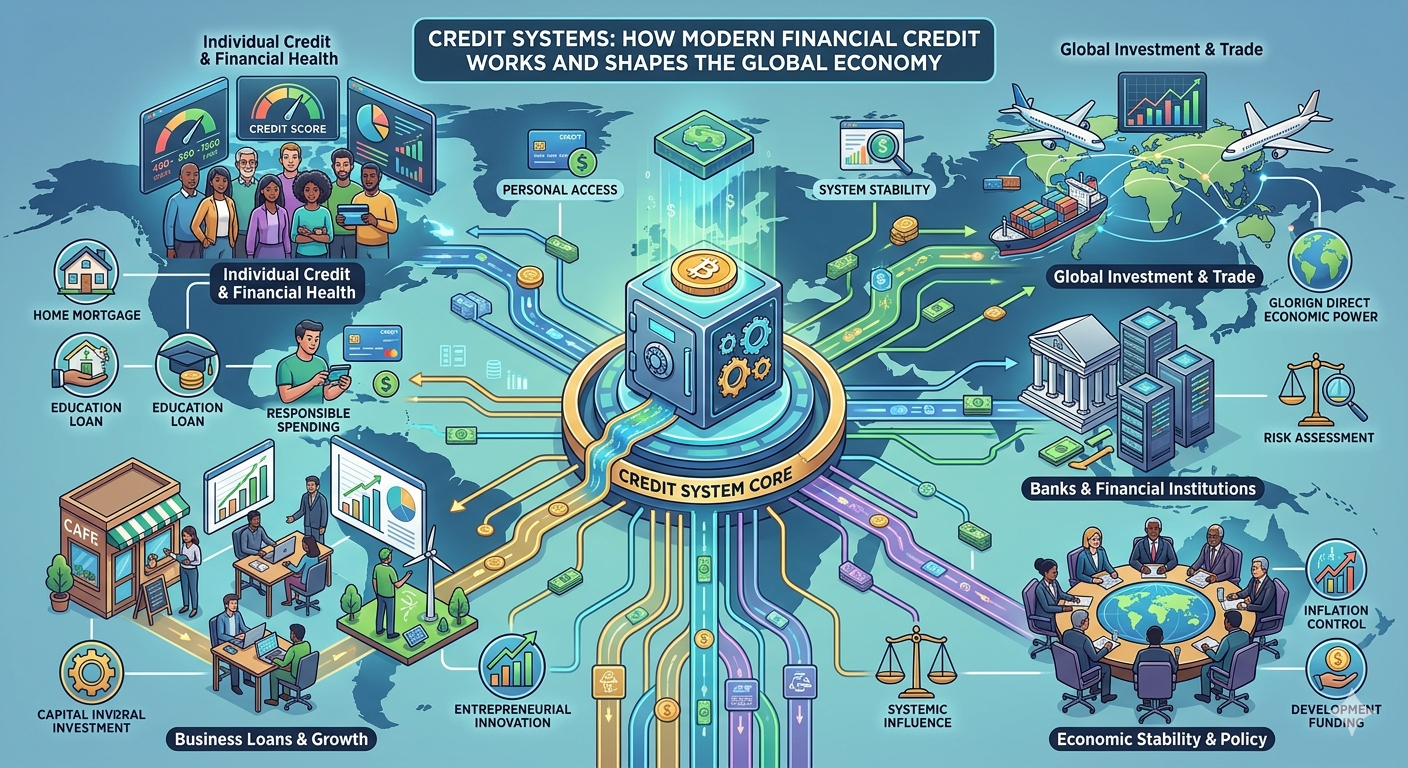
Introduction
Credit systems are one of the most important foundations of modern financial economies. Almost every major purchase, from buying a home in the United States to starting a business or using a credit card for online shopping, depends on some form of credit system.
In simple terms, credit allows individuals, businesses, and governments to access money or resources now with the promise of paying it back later. This system has made economic growth faster, increased consumer spending, and enabled financial opportunities that would not be possible through cash transactions alone.
Understanding how they work is essential for anyone who wants to manage money wisely, build financial stability, or operate in a modern economy.
This article provides a complete, original, and SEO-friendly explanation of credit systems, including how they work, their types, importance, risks, real-world applications, and future developments.
What is a Credit System?
Instead of requiring immediate payment, credit systems provide trust-based financial flexibility. The lender provides resources, and the borrower agrees to return the amount within a specified time period.
Credit systems exist in many forms, including:
- Credit cards
- Bank loans
- Mortgage systems
- Business financing
- Digital credit platforms
At the core of every credit system is trust-trust that the borrower will repay the borrowed amount according to agreed terms.
How Credit Systems Work
Credit systems function through a structured process that involves evaluation, approval, usage, and repayment.
Step 1: Credit Evaluation
Before lending money, financial institutions evaluate the borrower’s creditworthiness. This includes:
- Income level
- Employment history
- Credit score
- Debt history
- Financial stability
Step 2: Approval Process
If the borrower meets the requirements, the lender approves the credit request and defines:
- Credit limit
- Interest rate
- Repayment terms
- Fees and penalties
Step 3: Credit Usage
The borrower can now use the approved credit for purchases, loans, or financial needs.
Step 4: Repayment
The borrower repays the borrowed amount in installments or full payments, often with interest added.
Step 5: Credit History Update
Every repayment activity is recorded in credit bureaus, influencing future borrowing ability.
Types of Credit Systems
Credit systems come in different forms depending on usage and structure.
1. Consumer Credit
Examples include:
- Credit cards
- Personal loans
- Auto loans
- Retail financing
It allows people to buy goods and services immediately and pay later.
2. Business Credit
Businesses use credit to manage operations, expand, or invest.
Examples:
- Business loans
- Trade credit
- Equipment financing
- Working capital loans
Strong business credit helps companies grow faster.
3. Mortgage Credit
Mortgage credit is used to purchase real estate properties.
Features:
- Long repayment periods
- Lower interest rates
- Secured by property assets
This is one of the most important credit systems in countries like the United States.
4. Revolving Credit
Revolving credit allows users to borrow repeatedly up to a limit.
Example:
- Credit cards
Users can borrow, repay, and borrow again without reapplying.
5. Installment Credit
Examples:
- Car loans
- Home loans
- Student loans
Importance of Credit Systems in Modern Economy
Credit systems are essential for economic development and financial stability.
1. Boosting Consumer Spending
Credit allows consumers to purchase goods even when they don’t have immediate cash.
2. Supporting Business Growth
Companies use credit to expand operations, hire employees, and invest in technology.
3. Driving Economic Growth
Increased spending and investment lead to higher economic activity.
4. Improving Financial Access
Credit systems help individuals access opportunities like education, housing, and entrepreneurship.
5. Encouraging Financial Planning
Borrowers learn to manage budgets and repayment schedules responsibly.
Credit System in the United States
The United States has one of the most advanced credit systems in the world.
It is built on three major credit bureaus:
- Experian
- Equifax
- TransUnion
These agencies track credit behavior and generate credit scores.
Credit Score System
It is based on:
- Payment history
- Credit utilization
- Length of credit history
- Types of credit used
- New credit inquiries
A high credit score increases access to better loans and lower interest rates.
Benefits of Credit Systems
1. Financial Flexibility
Credit allows people to manage expenses even during financial shortages.
2. Easy Access to Loans
Banks and lenders provide quick access to funds based on credit history.
3. Opportunity Creation
Credit enables education, home ownership, and entrepreneurship.
4. Emergency Support
Credit cards and personal loans help during financial emergencies.
5. Global Financial Integration
Credit systems support international trade and business operations.
Risks and Challenges of Credit Systems
Despite their benefits, credit systems also carry risks.
1. Debt Accumulation
Excessive borrowing can lead to financial stress and long-term debt.
2. High Interest Rates
Poor credit scores can result in expensive borrowing costs.
3. Credit Mismanagement
Irresponsible spending leads to financial instability.
4. Identity Theft and Fraud
Digital credit systems are sometimes targeted by cybercriminals.
5. Economic Dependency
Over-reliance on credit can weaken financial discipline.
Role of Technology in Modern Credit Systems
Technology has transformed how credit systems operate.
Digital Lending Platforms
Online platforms provide instant loan approvals.
Artificial Intelligence
AI analyzes credit risk and predicts borrower behavior.
Big Data Analytics
Financial institutions use data to make lending decisions.
Mobile Banking
Users can manage credit through smartphones.
Blockchain Technology
Blockchain improves transparency and reduces fraud risks.
Credit Systems and E-Commerce
Credit systems are essential for online shopping and digital commerce.
They enable:
- Buy now, pay later services
- Credit card transactions
- Digital wallet payments
- Subscription-based services
Without credit systems, modern e-commerce would not function efficiently.
Credit Behavior and Financial Literacy
Understanding credit is a key part of financial literacy.
Good credit behavior includes:
- Paying bills on time
- Keeping credit utilization low
- Avoiding unnecessary debt
- Monitoring credit reports regularly
Financial education helps individuals build strong credit histories.
Future of Credit Systems
Credit systems are rapidly evolving due to technological innovation.
1. Instant Credit Approval
AI-driven systems will approve loans within seconds.
2. Decentralized Finance (DeFi)
Blockchain-based credit systems will reduce dependency on traditional banks.
3. Personalized Credit Scoring
Future systems may analyze alternative data such as spending habits and digital activity.
4. Cashless Credit Ecosystems
Digital economies will rely more on credit-based transactions.
5. Global Credit Integration
Credit systems may become more interconnected across countries.
Common Mistakes People Make with Credit
- Ignoring credit score importance
- Missing payment deadlines
- Maxing out credit cards
- Applying for too many loans
- Not understanding interest rates
Avoiding these mistakes helps maintain financial health.
Why Credit Systems Are Essential Today
Credit systems are not just financial tools-they are economic engines. They:
- Support personal financial growth
- Enable business expansion
- Increase consumer purchasing power
- Strengthen global economies
Without credit systems, modern financial systems would slow down significantly.
Conclusion
Credit systems are a cornerstone of modern economic life. They allow individuals and businesses to access financial resources, invest in opportunities, and manage expenses efficiently.
From credit cards in everyday shopping to large business loans and mortgages, credit plays a vital role in shaping financial decisions and economic development.
In countries like the United States, advanced credit systems provide structured financial opportunities while also emphasizing responsibility through credit scores and reporting systems.
However, successful use of credit requires discipline, awareness, and proper financial planning. When used wisely, credit becomes a powerful tool for building wealth and achieving financial goals.
As technology continues to evolve, credit systems will become faster, smarter, and more accessible, shaping the future of global finance in new and innovative ways.

