

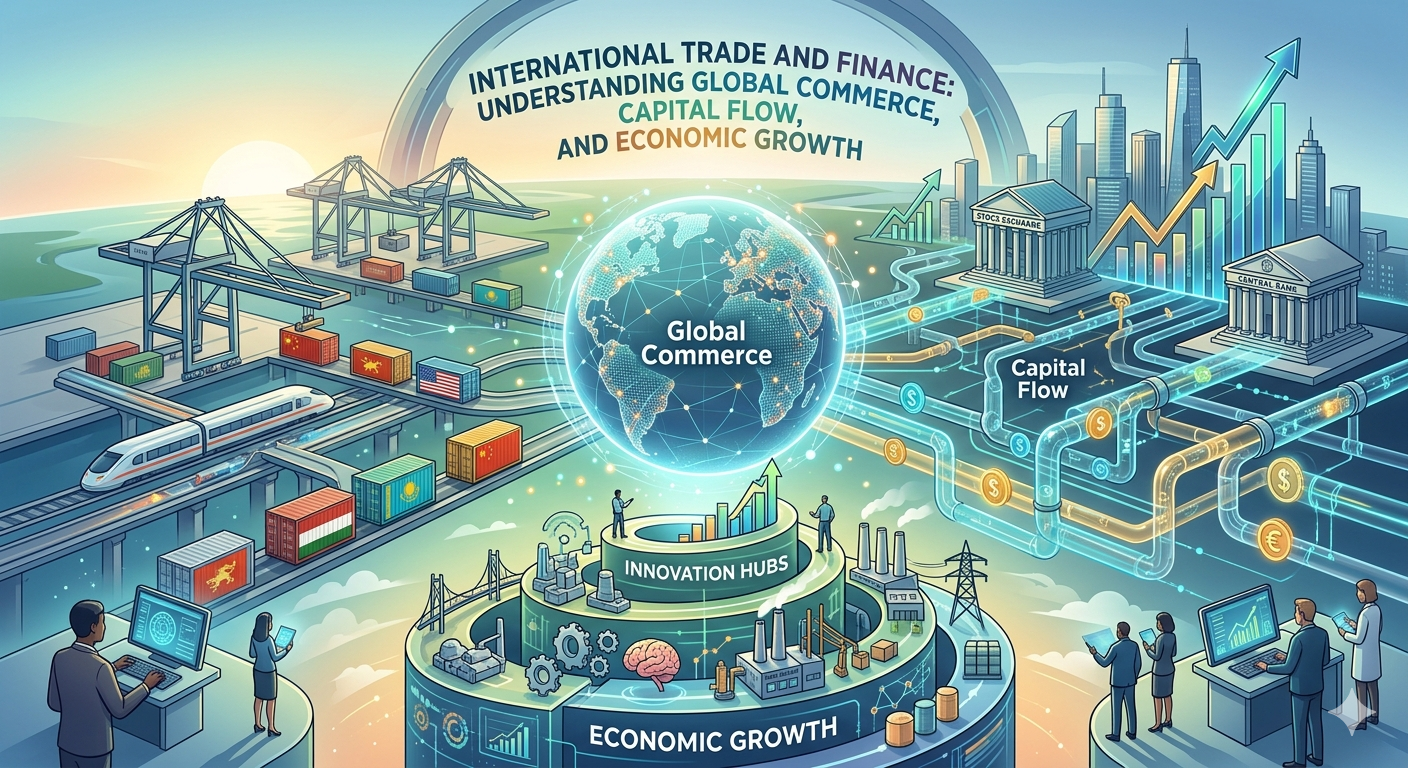
International trade and finance are essential in shaping the contemporary global economy. Countries no longer operate in isolation because businesses, governments, and consumers depend heavily on cross-border exchange of goods, services, and capital. From smartphones manufactured across multiple countries to international banking transactions happening every second, global trade and financial systems have become deeply interconnected.
Understanding international trade and finance is important because these systems influence economic growth, employment, inflation, investment opportunities, and even everyday consumer prices. Whether someone is studying economics, running a business, investing money, or simply trying to understand how the global economy works, international trade and finance are fundamental concepts.
This article provides a complete overview of international trade and finance, how global markets operate, major components, advantages, challenges, risks, and future developments.
What Is International Trade?
International trade refers to the exchange of goods and services between countries. Instead of producing everything domestically, countries import products they need and export products they can produce efficiently.
International trade generally consists of two major activities:
Imports
Imports are products or services purchased from foreign countries.
Examples include:
- Electronics imported from foreign manufacturers
- Oil purchased from exporting nations
- Foreign software services
Exports
Exports are goods and services sold to other countries.
Examples include:
- Agricultural products
- Industrial machinery
- Technology services
- Consumer products
International trade allows countries to access resources and products that may not be available locally.
What Is International Finance?
International finance deals with the movement of money across countries. It includes:
- Currency exchange
- Foreign investments
- International banking
- Cross-border lending
- Global financial institutions
International finance supports trade by providing the financial systems necessary for businesses and governments to operate globally.
Without international finance, large-scale global commerce would be extremely difficult.
Why International Trade Is Important
International trade creates economic opportunities and helps countries improve living standards.
1. Access to More Products
Consumers get access to products from different parts of the world.
This increases:
- Product variety
- Competition
- Consumer choice
2. Economic Growth
Trade creates jobs and supports industries.
Countries that export successfully often experience:
- Higher GDP growth
- Increased production
- Better employment opportunities
3. Specialization and Efficiency
Countries specialize in producing goods that they can manufacture most efficiently.
This improves productivity.
4. Lower Prices
Competition and large-scale production often reduce costs for consumers.
Why International Finance Matters
International finance supports economic stability and global investment.
Major benefits include:
Capital Movement
Money can move to areas where it is most productive.
Investment Opportunities
Investors can diversify internationally.
Business Expansion
Companies can access foreign funding.
Currency Exchange Support
Businesses require financial systems for global transactions.
Components of International Trade and Finance
Several components work together to create global economic systems.
Foreign Exchange Markets
Currency markets allow businesses and governments to convert one currency into another.
Examples:
- Dollar to Euro conversion
- Yen to Dollar exchange
- International payment settlements
Exchange rates significantly affect trade competitiveness.
International Banking
Banks facilitate:
- International payments
- Trade financing
- Currency exchange
- Cross-border lending
Large businesses rely heavily on international banking networks.
Foreign Direct Investment (FDI)
FDI occurs when companies invest directly in foreign countries.
Examples include:
- Building factories abroad
- Opening international offices
- Acquiring foreign businesses
FDI promotes job creation and economic development.
International Capital Markets
These markets allow governments and corporations to raise money globally.
Examples include:
- International bonds
- Global stock markets
- Cross-border investments
Types of International Trade
International trade generally occurs in three major forms.
1. Export Trade
Selling domestic goods internationally.
2. Import Trade
Buying products from foreign suppliers.
3. Entrepot Trade
Importing products for re-export purposes.
Each type contributes differently to economic growth.
Comparative Advantage and Global Trade
One of the biggest reasons international trade exists is comparative advantage.
This means:
Countries should focus on specializing in goods they can produce more efficiently.
For example:
- One country may produce oil efficiently
- Another may specialize in technology
- Another may focus on agriculture
Trade allows all countries to benefit from specialization.
Major Factors Affecting International Trade
Several variables influence trade activities.
Exchange Rates
Currency value changes affect export competitiveness.
Government Policies
Taxes, tariffs, and regulations influence trade.
Economic Conditions
Strong economies often import more products.
Political Stability
Businesses prefer stable environments.
Transportation Costs
Shipping costs influence profitability.
Trade Barriers and Restrictions
Although trade offers benefits, restrictions exist.
Tariffs
Taxes imposed on imported products.
Quotas
Limits on import quantities.
Trade Embargoes
Restrictions preventing trade entirely.
Regulations
Complex rules affecting international business.
Governments use these tools for economic or political reasons.
Role of Technology in International Trade
Technology has transformed global commerce significantly.
Digital Payments
Cross-border payments are faster.
E-Commerce
Businesses sell globally through online platforms.
Supply Chain Management
Technology improves logistics efficiency.
Communication Tools
Global collaboration is easier.
Technology continues reducing barriers between countries.
Globalization and International Finance
Globalization has increased economic interconnectedness.
Benefits include:
- More investment opportunities
- Increased trade volume
- Better access to technology
- Higher market efficiency
However, globalization also creates risks.
Risks in International Trade and Finance
International systems are not risk-free.
Currency Risk
Exchange rates fluctuate constantly.
Political Risk
Government changes affect markets.
Economic Risk
Recessions impact trade demand.
Credit Risk
Borrowers may fail to repay debts.
Supply Chain Disruptions
Unexpected events interrupt trade flows.
Businesses use risk management strategies to reduce these dangers.
Major International Financial Institutions
Several organizations influence global finance.
Examples include:
- International monetary institutions
- Development banks
- Trade organizations
- Regional financial organizations
These institutions support economic stability and cooperation.
Trade Deficits and Trade Surpluses
Countries measure trade performance using balances.
Trade Deficit
Imports exceed exports.
Trade Surplus
Exports exceed imports.
Both situations have advantages and disadvantages depending on economic conditions.
Future of International Trade and Finance
Global commerce continues evolving rapidly.
Future trends include:
Digital Currency Growth
Cross-border payments may become faster.
AI Integration
Artificial intelligence will improve financial analysis.
Supply Chain Diversification
Businesses are reducing dependence on single regions.
Green Finance
Environmental sustainability is influencing investment decisions.
Increased Automation
Technology will reshape global trade systems.
How International Trade Impacts Everyday Life
Many people do not realize how much trade affects daily activities.
Examples include:
- Smartphone components sourced globally
- Imported food products
- International online shopping
- Foreign investments affecting retirement funds
Global trade influences prices, jobs, and purchasing power.
Final Thoughts
International trade and finance are essential components of the modern economy. They connect countries, businesses, investors, and consumers through the exchange of goods, services, and capital.
Trade creates economic growth, increases efficiency, and improves living standards, while finance provides the systems necessary for money and investments to move globally.
Although challenges such as economic uncertainty, currency fluctuations, and political risks remain, international trade and finance continue driving innovation and economic development around the world.
Understanding these systems helps individuals, businesses, and investors make better decisions in an increasingly interconnected global economy.

