

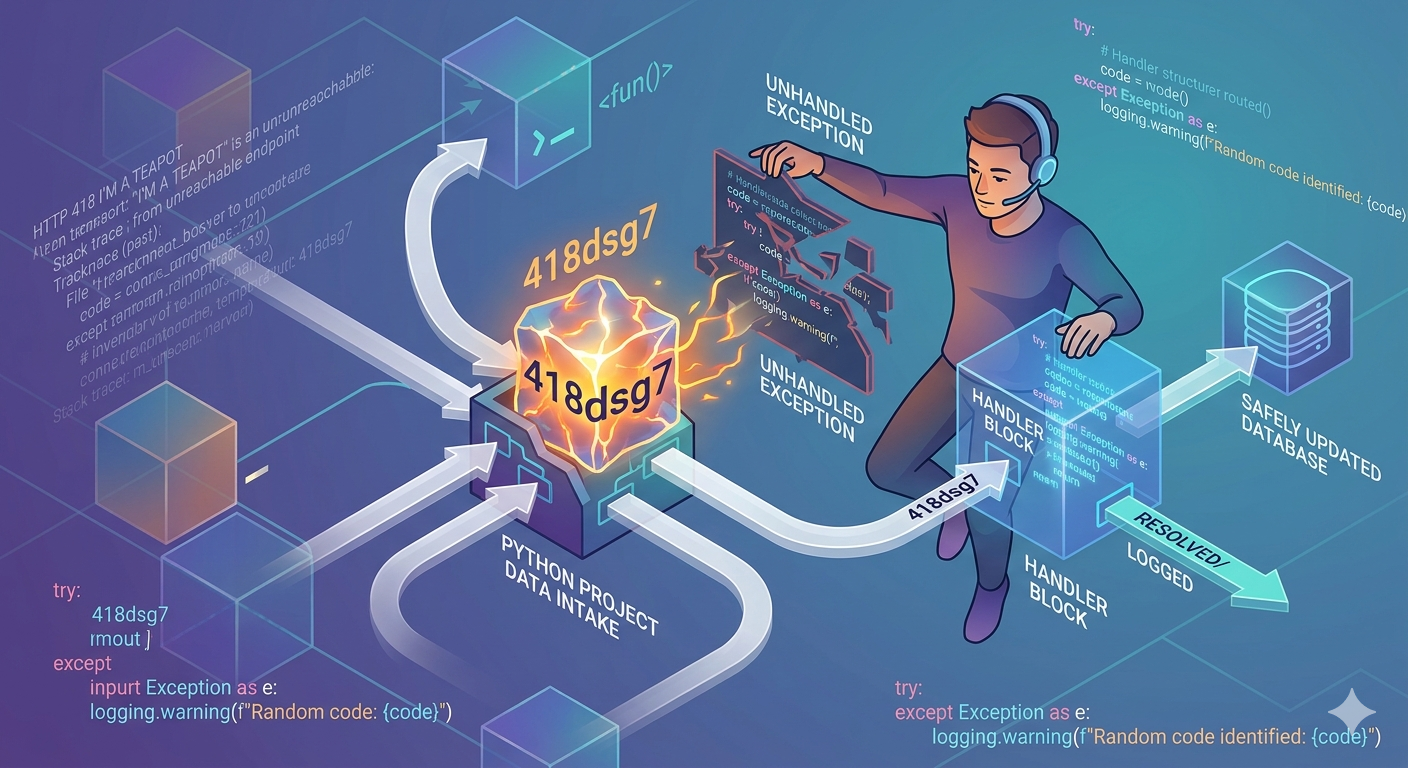
In the world of programming, developers often come across unusual strings, codes, or identifiers that look random at first glance.
At first, this term may look like a specific Python function, module, or library. However, in most cases, strings like this are not official Python keywords or built-in libraries. Instead, they usually represent user-generated identifiers, temporary codes, variable names, or system-generated tokens.
This article provides a complete breakdown of what “418dsg7 python” could mean, how Python handles such identifiers, how developers use random strings in coding, and why understanding structured naming is important in programming and software development.
What Is “418dsg7 Python”?
The phrase “418dsg7 python” does not correspond to any official Python package, library, or built-in function. Instead, it likely falls into one of the following categories:
- Random variable or identifier name
- Database reference key
- Temporary session token
- User-generated code snippet
- Placeholder text in development
- Auto-generated system ID
In programming, especially in Python, developers frequently deal with such strings when building applications, handling data, or interacting with APIs.
Why Random Strings Appear in Programming
Random-looking strings like “418dsg7” are extremely common in software development.
They are used for several purposes:
1. Unique Identification
Systems often generate random IDs to uniquely identify users, sessions, or objects.
Example uses:
- User session IDs
- Database primary keys
- Transaction references
- API request identifiers
2. Security Tokens
Random strings are used to secure applications.
They help in:
- Authentication systems
- Password reset links
- API security keys
3. Temporary Variables
Developers sometimes use random names during testing or debugging.
4. Data Obfuscation
To protect sensitive information, systems may replace real data with random strings.
Python and Random Identifiers
Python is widely used for handling data, automation, web development, and artificial intelligence. One of its strengths is flexibility in managing dynamic values like random strings.
Example of Generating Random Strings in Python
Python provides built-in libraries for creating random identifiers:
- random
- string
- uuid
A simple example conceptually looks like this:
- Generate a random combination of letters and numbers
- Store it as a unique identifier
- Use it in applications like tracking or session management
These identifiers may look similar to “418dsg7”.
How Python Handles String-Based Identifiers
In Python, strings are extremely flexible data types. Developers use them for:
- Variable names (indirectly through dictionaries)
- Data storage keys
- JSON processing
- API responses
- File naming systems
Python does not restrict string formats, which is why random combinations are common.
Possible Meaning of “418dsg7” in Programming Context
Although not officially defined, “418dsg7” could represent:
1. System-Generated Code
Many backend systems create unique IDs automatically.
2. Database Entry Key
Databases often assign random primary keys.
3. Encrypted or Hashed Value
Some systems convert data into unreadable formats.
4. Developer Test Value
Developers often use random strings during testing phases.
5. API Response Token
APIs sometimes return random identifiers for tracking requests.
Importance of Unique Identifiers in Software Development
Modern applications rely heavily on unique identifiers.
Why They Are Important:
1. Avoid Data Conflicts
Every record must be unique to prevent overwriting.
2. Improve System Tracking
Systems can track users, sessions, or events.
3. Enhance Security
Randomized IDs are harder to guess.
4. Support Scalability
Large applications need millions of unique identifiers.
Python Use Cases Where Random Strings Matter
Python developers frequently use random strings in real-world projects.
1. Web Development
Frameworks like Django and Flask use session IDs.
2. Data Science
Datasets may include unique record identifiers.
3. API Development
APIs assign request IDs for tracking.
4. Cybersecurity
Encryption systems generate secure tokens.
5. Automation Tools
Scripts often generate temporary file names.
How Developers Generate Random Codes in Python
There are multiple approaches:
Method 1: Using Random Module
Used for basic random generation.
Method 2: Using UUID Library
Provides globally unique identifiers.
Method 3: Custom Logic
Combining letters and numbers manually.
These methods ensure uniqueness and reliability.
Why Strings Like “418dsg7” Look Random
These strings appear random because:
- They combine letters and numbers
- They lack semantic meaning
- They are system-generated
- They are not human-readable
This randomness is intentional and useful in computing systems.
Common Misunderstandings About Such Codes
- Hidden software
- Secret Python functions
- Malware identifiers
- Special programming commands
In reality, most of these strings are simply identifiers without deeper meaning.
Python Flexibility and Why It Allows Such Patterns
Python is designed to be simple and flexible.
It allows:
- Dynamic variable creation
- Flexible data structures
- Easy handling of strings
- Integration with APIs and systems
Because of this flexibility, Python often deals with unpredictable input formats.
Real-World Example: How Such IDs Are Used
Imagine an e-commerce website:
- A user places an order
- The system generates an ID like “418dsg7”
- This ID tracks the order
- The system uses it in databases and APIs
This ensures every transaction remains unique.
Why Developers Prefer Random IDs Over Sequential Numbers
Older systems used sequential IDs like 1, 2, 3, 4.
Modern systems prefer random IDs because:
1. Security Improvement
Sequential IDs are predictable.
2. Scalability
Distributed systems require unique generation.
3. Global Uniqueness
Multiple servers can generate IDs without conflict.
Python and Data Integrity
Random identifiers help maintain data integrity in:
- Cloud applications
- Microservices
- Large databases
- Real-time systems
Without unique identifiers, systems would face serious conflicts.
How Beginners Should Understand Such Strings
If you are new to programming, remember:
- Not every code has a hidden meaning
- Random strings are often system-generated
- Python frequently works with such data
- Focus on structure, not appearance
Understanding this reduces confusion when reading code.
Best Practices When Working With Identifiers in Python
Developers should follow these rules:
1. Keep IDs Unique
Avoid duplication at all costs.
2. Use Standard Libraries
Prefer built-in Python tools.
3. Avoid Hardcoding Random Values
Let systems generate them dynamically.
4. Secure Sensitive Data
Never expose real user data.
Future of Identifier Systems in Programming
As technology evolves, identifier systems are becoming more advanced.
Future trends include:
- AI-generated identifiers
- Blockchain-based unique IDs
- Enhanced encryption systems
- Cross-platform identity tracking
Python will continue playing a key role in these systems.
Final Thoughts
The term “418dsg7 python” does not represent a specific Python function or library. Instead, it reflects a common concept in programming-random or system-generated identifiers used in software development.
In Python and other programming languages, such strings are essential for ensuring uniqueness, security, and scalability in modern applications. Whether used in databases, APIs, or web systems, random identifiers play a crucial role in keeping digital systems organized and efficient.
For beginners, the key takeaway is simple: not every string in programming has a hidden meaning-many are just functional tools designed to help systems operate smoothly.
Understanding this concept helps developers and learners better interpret real-world code and improve their programming knowledge.

