

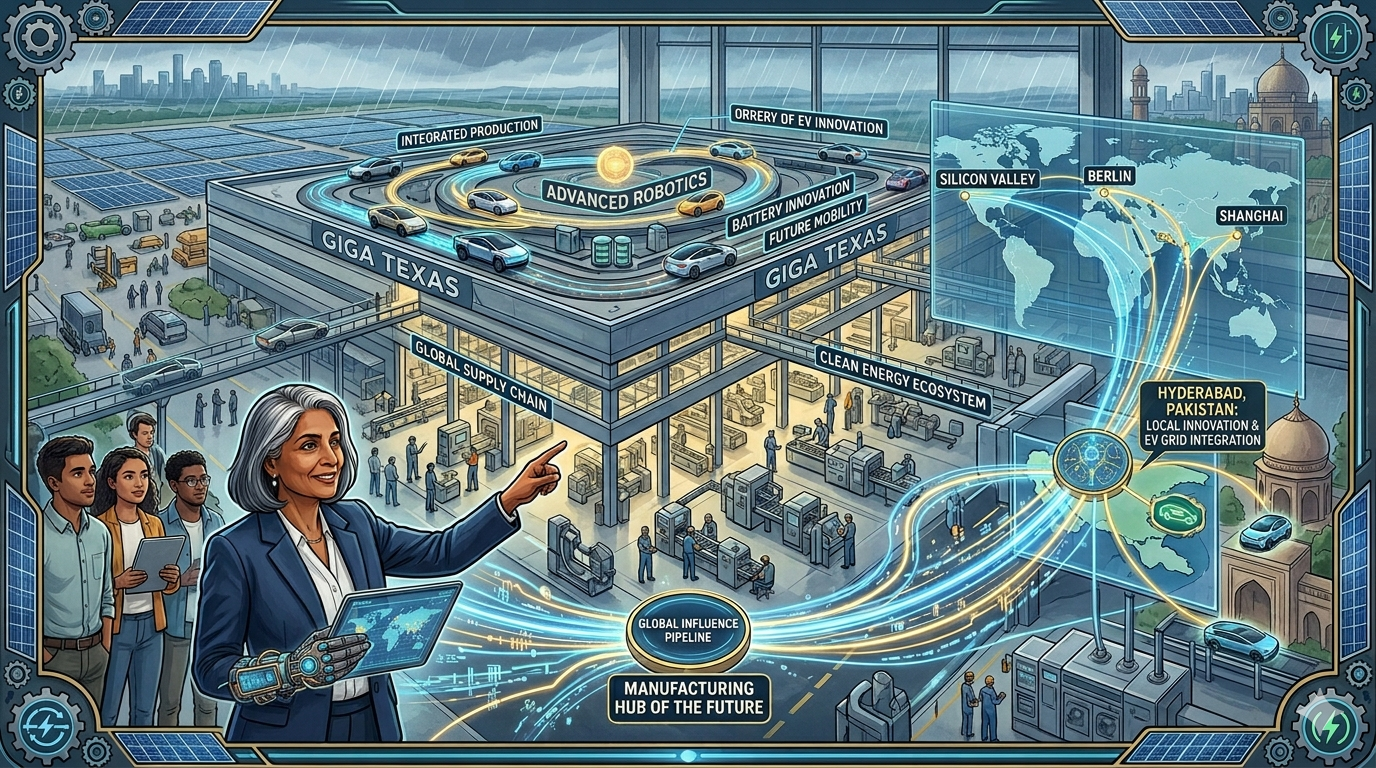
The automotive industry has experienced enormous changes during the last decade, especially as electric vehicles moved from niche products into mainstream transportation.
When people discuss electric vehicles, conversations often focus on batteries, software, or vehicle performance. However, the factories behind these products play an equally important role. Manufacturing determines how quickly vehicles can be produced, how efficiently costs can be controlled, and how rapidly new technologies can reach consumers.
The term Tesla Factory has become widely associated with advanced manufacturing, large-scale production, automation, and next-generation industrial systems.
This guide explores how Tesla factories work, why they matter, and how modern manufacturing facilities are reshaping the automotive industry.
What Is a Tesla Factory?
A Tesla factory refers to manufacturing facilities operated by Tesla for producing electric vehicles, batteries, energy products, and related technologies.
Unlike traditional automotive facilities that mainly focus on assembling vehicles, modern electric vehicle factories often combine multiple operations within large production systems.
These facilities may include:
- Vehicle assembly
- Battery manufacturing
- Component production
- Software integration
- Quality testing
- Logistics operations
The goal is to increase production efficiency while reducing manufacturing complexity.
Why Manufacturing Matters in Electric Vehicles
Building electric vehicles at large scale creates challenges that differ from traditional automotive production.
Manufacturers must coordinate:
- Battery supply
- Electronics production
- Software systems
- Vehicle assembly
- Supply chain logistics
Production efficiency directly affects:
- Vehicle prices
- Delivery speed
- Market expansion
- Consumer availability
Factories therefore become critical parts of business strategy.
Integrated Production
Combining multiple operations within one location.
Advanced Automation
Reducing repetitive manual tasks.
Digital Monitoring
Tracking production performance in real time.
Software-Based Operations
Using data systems to improve efficiency.
Manufacturing has evolved beyond simple assembly lines.
Why Large Factories Are Necessary
Electric vehicle demand increased significantly, creating pressure for higher production capacity.
Large facilities provide advantages such as:
- Higher production output
- Improved logistics
- Lower transportation costs
- Better operational control
- Faster scaling opportunities
Large manufacturing spaces also allow companies to expand production more easily.
How Vehicle Production Works Inside Modern Factories
Vehicle production involves thousands of individual steps.
Although processes vary, manufacturing generally includes several major stages.
Raw Materials and Components
Parts arrive from suppliers or internal production systems.
Structural Assembly
Vehicle bodies are constructed and joined together.
Paint Operations
Protective coatings and finishes are applied.
Battery Installation
Battery systems are integrated into vehicle structures.
Final Assembly
Interior systems, electronics, and software components are installed.
Testing and Inspection
Vehicles undergo verification before delivery.
Each stage requires coordination between people, machinery, and software.
Automation and Robotics in Manufacturing
Automation is one of the most recognizable aspects of modern factories.
Robotic systems often perform:
- Welding
- Material movement
- Precision assembly
- Inspection procedures
Benefits of automation may include:
- Increased consistency
- Faster production
- Reduced repetitive labor
- Improved manufacturing precision
Human workers still remain essential because many tasks require flexibility and decision-making.
Why Battery Manufacturing Is So Important
Electric vehicles depend heavily on battery production.
Battery systems influence:
- Vehicle pricing
- Production speed
- Driving range
- Supply chain stability
Large factories increasingly attempt to bring battery production closer to vehicle assembly.
This reduces complexity and transportation costs.
Battery manufacturing therefore becomes a central part of factory strategy.
Supply Chain Management Inside Large Manufacturing Operations
Vehicle production requires massive coordination.
Factories must manage:
- Raw materials
- Electronic components
- Batteries
- Interior materials
- Mechanical systems
Supply chain disruptions can slow production significantly.
Large facilities often attempt to reduce risks through:
- Localized production
- Inventory management
- Vertical integration strategies
Supply chains strongly influence production efficiency.
Why Software Plays a Bigger Role Than Before
Modern vehicles contain significant software integration.
Factories increasingly depend on software for:
- Production monitoring
- Quality control
- Inventory management
- Predictive maintenance
- Manufacturing analytics
Software systems allow factories to respond more quickly to operational challenges.
Economic Impact of Large Manufacturing Facilities
Large factories affect more than vehicle production.
Economic effects may include:
Employment Opportunities
Thousands of workers may support production operations.
Infrastructure Growth
Roads and transportation systems often expand.
Local Business Activity
Nearby businesses may experience increased demand.
Regional Investment
Large projects can attract additional industries.
Industrial projects often reshape surrounding communities.
Environmental Considerations in Manufacturing
Large-scale manufacturing raises environmental questions.
Important discussions often include:
- Energy usage
- Water consumption
- Material sourcing
- Waste management
Electric vehicle production aims to support cleaner transportation, but manufacturing itself still requires substantial resources.
Balancing sustainability and growth remains important.
Challenges Large Manufacturing Operations Face
Large factories create opportunities but also face challenges.
Common issues include:
Scaling Production
Increasing output while maintaining quality is difficult.
Workforce Training
Large facilities require specialized employees.
Supply Constraints
Shortages can interrupt production.
Equipment Maintenance
Advanced machinery requires constant monitoring.
Rapid expansion creates operational complexity.
Why Manufacturing Speed Matters
Consumers often focus on vehicle features.
However, manufacturing speed influences:
- Delivery times
- Product availability
- Pricing stability
- Market competitiveness
Companies unable to scale production may struggle to meet demand.
Production capacity therefore becomes a competitive advantage.
How Manufacturing Influences Vehicle Pricing
Production efficiency often affects cost.
Large-scale manufacturing may help through:
- Higher output
- Reduced waste
- Faster production cycles
- Better resource utilization
Although many factors influence prices, manufacturing efficiency plays a major role.
The Future of Factory Technology
Manufacturing continues evolving rapidly.
Future developments may include:
- Increased automation
- More AI-assisted production
- Improved battery manufacturing
- Smarter logistics systems
- More connected factories
Industrial systems increasingly rely on data and software.
Why Consumers Should Care About Factories
Consumers may wonder why factory discussions matter.
Manufacturing affects:
- Vehicle availability
- Product quality
- Innovation speed
- Pricing
- Delivery timelines
Factories influence ownership experiences even when consumers never see them.
The Bigger Picture of Tesla Manufacturing
Tesla factories represent broader industry changes rather than simply vehicle assembly locations.
They reflect:
- Electric vehicle growth
- Manufacturing modernization
- Increased automation
- Software-driven production
- Supply chain transformation
As transportation continues changing, factories become increasingly important parts of technological progress.
Final Thoughts
Tesla factories demonstrate how modern manufacturing is evolving beyond traditional assembly methods. These facilities combine automation, software, battery production, logistics, and large-scale operations to support growing demand for electric transportation.
The future of automotive manufacturing will likely depend not only on better vehicles but also on better production systems.
As manufacturing technology continues improving, factories themselves may become just as important as the vehicles they produce.

