Nothing ruins a backyard barbecue faster than a wasp zigzagging over the potato salad. One minute you’re enjoying the sunshine, and the next, everyone’s swatting the air and eyeing the nearest exit. Wasps have a way of turning relaxed afternoons into tense standoffs, and once a nest takes hold near your home, the problem rarely resolves on its own.
Unlike bees, wasps can sting multiple times without losing their stinger, which makes an aggravated nest a genuine hazard for kids, pets, and anyone with a sting allergy. Add in their tendency to build nests in sneaky spots—attic corners, wall voids, porch eaves—and it’s easy to see why so many homeowners find themselves searching for answers after the problem has already grown out of hand.
This post breaks down why wasps show up in the first place, how to spot a nest before it becomes a bigger issue, and what steps actually work for lasting relief. By the end, you’ll know exactly what to look for and when it’s time to call in reinforcements.
Why Do Wasps Keep Coming Back to Your Property?
Wasps aren’t randomly passing through your yard. They’re drawn to specific conditions that make your property feel like prime real estate. Understanding these triggers is the first step toward making your home less appealing to them.
Food sources top the list. Wasps are scavengers, and they’re especially drawn to sugary drinks, ripe fruit, and protein-rich leftovers from grilling. An uncovered trash can or a forgotten soda left on the patio table is basically an open invitation.
Shelter opportunities come in a close second. Wasps look for sheltered, undisturbed areas to build their nests—think eaves, attic vents, hollow fence posts, and even old rodent burrows. The more nooks and crannies your property offers, the more attractive it becomes.
Seasonal timing also plays a role. Wasp activity typically ramps up in late spring as colonies grow, then peaks in summer and early fall when food sources are scarce, and worker wasps become more aggressive in their search for sustenance. This is usually when homeowners notice the most activity and, unfortunately, the most stings.
How Can You Tell If You Have a Wasp Problem?
Spotting the early warning signs can save you from a much bigger headache later. Here’s what to watch for:
- Increased wasp traffic: If you’re noticing more wasps flying in and out of a specific area of your yard or home, there’s likely a nest nearby.
- Visible nests: Paper wasp nests look like upside-down umbrellas with exposed honeycomb cells, while yellowjackets and hornets often build enclosed, papery nests that can be underground or tucked into wall cavities.
- Faint buzzing sounds: A persistent hum coming from a wall, attic, or eave is often a telltale sign of a nest growing inside a structure.
- Chewed wood or siding: Wasps gather wood fibers to build their nests, so you might notice small, scraped patches on fences, deck railings, or siding.
If you spot any of these signs, it’s worth taking action sooner rather than later. Nests tend to grow quickly, and a small colony in June can become a much larger, more defensive one by August.
What Should You Do If You Find a Wasp Nest?
Once you’ve confirmed a nest is present, the next question is what to do about it. This is where a lot of homeowners run into trouble, because wasp nests are trickier to handle than people expect.
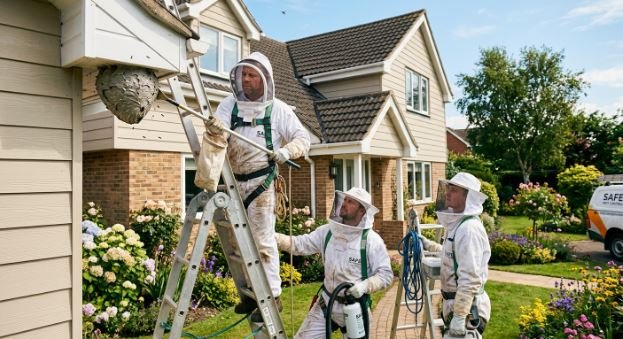
DIY removal might seem like the cheaper option, but it comes with real risks. Wasps release pheromones when threatened, which signals the rest of the colony to attack. That means a single swat or a poorly aimed spray can trigger a group response, putting you and anyone nearby in danger. Nests built in hard-to-reach spots, like inside wall voids or high up under rooflines, also make DIY treatment far less effective and more hazardous.
Professional treatment solves both of these problems. Trained technicians know how to identify the species, locate the nest (even when it’s hidden), and apply treatment methods that eliminate the colony without putting your household at risk.
Why Choose Professional Help for Long-Term Relief?
A safer, longer-lasting way to protect your family from painful stings starts with professional wasp control, especially when nests are hidden in walls, attics, or other hard-to-reach areas. Critter Stop’s trained technicians know exactly where wasps like to build, how to approach a nest without provoking an attack, and how to treat the problem at its source so it doesn’t return next season.
Beyond nest removal, Critter Stop also focuses on prevention. That means identifying the conditions that attracted wasps in the first place, sealing entry points, and offering guidance on reducing food sources around your property. This combination of removal and prevention is what separates a quick fix from a lasting solution.
For homeowners who’ve dealt with recurring wasp problems year after year, this kind of thorough, preventive approach can make all the difference. Instead of treating the same nest location every summer, you get a plan that addresses the root cause.
Take Back Your Outdoor Space This Season
Wasps don’t have to dictate how you use your own backyard. With a clear understanding of what attracts them, how to spot the early signs of a nest, and when to bring in professional help, you can enjoy your outdoor space without constantly looking over your shoulder.
If you’ve noticed increased wasp activity around your home or spotted a nest forming, don’t wait for the colony to grow. Reach out to Critter Stop today to schedule an inspection and get a treatment plan tailored to your property. A sting-free summer is closer than you think.
FAQs About Wasp Problems
How long does it take to get rid of a wasp nest?
Most wasp nest removals can be completed in a single visit, though full colony elimination may take a few days as remaining wasps return to a treated nest and are affected by the treatment.
Can I just leave a wasp nest alone?
Leaving a nest untreated allows the colony to grow larger and more aggressive over time, increasing the risk of stings as the season progresses.
Are all wasp species dangerous?
While most wasps will only sting if threatened, species like yellowjackets and hornets tend to be more territorial and may attack with less provocation, especially near their nest.
Will wasps come back after a nest is removed?
New wasps may attempt to build nests in the same general area if the conditions that attracted them in the first place aren’t addressed, which is why prevention matters as much as removal.