A custom iron gate starts long before any steel is cut. The finished piece may look simple, but it reflects dozens of decisions about size, weight, style, and site conditions. Knowing what happens at each stage helps homeowners ask better questions and end up with a gate that works as well as it looks.
Gates With Different Jobs
- Not every gate does the same work, and its role shapes the design from the start:
- Driveway gates that span wide openings and often run on motorized operators
- Pedestrian gates at front walks that set the first impression of the home
- Courtyard and entry gates that frame a front door or private patio
- Side yard and garden gates that see heavy daily use with tools and pets
- A driveway gate needs stiffer framing to resist sag across a long span, while a garden gate can be lighter and more decorative.
Measuring and Drawing Before Fabrication
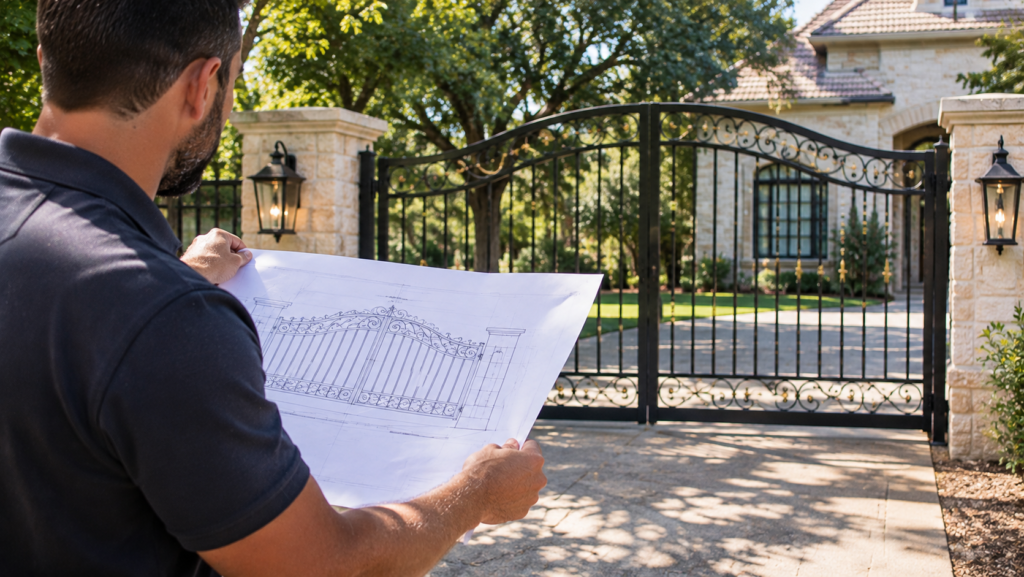
Accurate site measurements are the foundation of a good gate. Opening width, ground slope, post condition, and swing clearance all affect the final dimensions. A driveway that rises even a few inches across its width can stop a swing gate short, which may call for a sliding design or a raked bottom rail. Masonry columns and nearby trees also affect where hinges and latches can mount. For homeowners commissioning an Architectural Iron Gate in DFW, the drawing stage is the best time to settle style details and hardware choices. Shop drawings or renderings show picket spacing, scroll patterns, finials, and arch height before anything is built. Changes on paper cost little, while changes after welding cost far more. This stage is also the right moment to plan for future automation, so posts and wiring paths are ready even if an operator is added later.
Inside the Fabrication Shop
Once the design is approved, steel bar, tube, and plate are cut to size and welded into frames. Decorative elements like scrolls, collars, and forged pickets are added, then welds are ground smooth so the finished surface looks continuous. Keeping design, fabrication, and installation under one roof tends to produce tighter tolerances, since the people building the gate also understand the site. After fabrication, the metal is cleaned and powder coated in the chosen color, creating a finish that holds up far better than paint.
Upkeep That Keeps Iron Looking New
- A powder-coated gate needs little maintenance, but a short routine extends its life:
- Rinse dust and pollen away a few times a year
- Touch up scratches before rust can take hold
- Lubricate hinges and check latch alignment
- Redirect sprinklers that spray the gate daily
- North Texas clay soil can shift posts over time, so a gate that begins to drag or misalign should be adjusted early.
A well-made gate reflects careful planning at every stage. Thoughtful measurements, clear drawings, skilled fabrication, and simple upkeep keep it secure and attractive for decades.