

Rats rarely announce their arrival. They slip through gaps smaller than a quarter, nest in wall cavities, and go about their business while you remain blissfully unaware—until the evidence piles up. By the time most homeowners notice something’s wrong, a few rats have usually become a colony.
Understanding the early warning signs can save you from a much bigger headache down the road. Rats breed quickly, chew through electrical wiring, and contaminate food sources with astonishing speed. The sooner you catch an infestation, the easier it is to resolve.
This post walks through the telltale signs of a rat problem, why they show up in the first place, and what steps actually work to get rid of them for good.
Why Do Rats Invade Homes in the First Place?
Rats are opportunists. They’re drawn to three things: food, water, and shelter. A home that offers all three—especially during colder months—becomes an irresistible target.
Common entry points include:
- Gaps around pipes, vents, or utility lines
- Damaged weather stripping under doors
- Cracks in the foundation
- Unscreened chimneys and roof vents
Once inside, rats don’t need much space to settle in. A gap the width of a pencil is enough for a young rat to squeeze through, and they’re capable climbers, swimmers, and chewers. Their front teeth never stop growing, which means they’re constantly gnawing on something to keep them worn down—wires, wood, insulation, even plastic piping.
What Are the Most Common Signs of a Rat Infestation?
Rats are nocturnal and naturally cautious, which makes direct sightings less common than you’d think. Instead, homeowners typically notice the aftermath of their activity.
Droppings in Hidden Corners
Rat droppings are one of the clearest indicators of an infestation. They’re typically dark brown, about the size of a grain of rice, and tend to show up near food sources, along baseboards, or inside cabinets and pantries.
Gnaw Marks on Furniture or Wiring
Because their teeth never stop growing, rats gnaw constantly. Look for chew marks on wood furniture, cardboard boxes, or—more concerning—electrical wiring. Damaged wiring isn’t just an inconvenience; it’s a legitimate fire hazard.
Grease Marks Along Walls
Rats tend to travel the same paths repeatedly, often hugging walls as they move. Over time, the oils and dirt on their fur leave behind dark, greasy smudges along baseboards and entry points.
Scratching Sounds at Night
Since rats are most active after dark, many homeowners first notice a problem through sound. Scratching, scurrying, or gnawing noises coming from walls, attics, or crawl spaces are a strong indicator that rats have moved in.
A Lingering Musty Odor
A persistent, musky smell—particularly in enclosed spaces like basements or attics—often points to rat urine and nesting material. The smell tends to intensify as the infestation grows.
How Fast Can a Rat Problem Get Out of Control?
Rats reproduce at an alarming rate. A female rat can produce several litters per year, with each litter containing anywhere from six to twelve pups. Those pups reach reproductive maturity in a matter of weeks. What starts as a single rat finding its way into your garage can, within a few months, become a full-blown colony living in your walls.
This is exactly why early intervention matters so much. The longer an infestation goes unaddressed, the more extensive—and expensive—the cleanup and repair process becomes.
What Should You Do If You Suspect a Rat Infestation?
If you’ve noticed any of the signs above, the next step is figuring out how severe the problem actually is. DIY traps and store-bought repellents might handle a single stray rodent, but established infestations usually require a more thorough approach—one that identifies entry points, removes existing rats, and prevents future access.
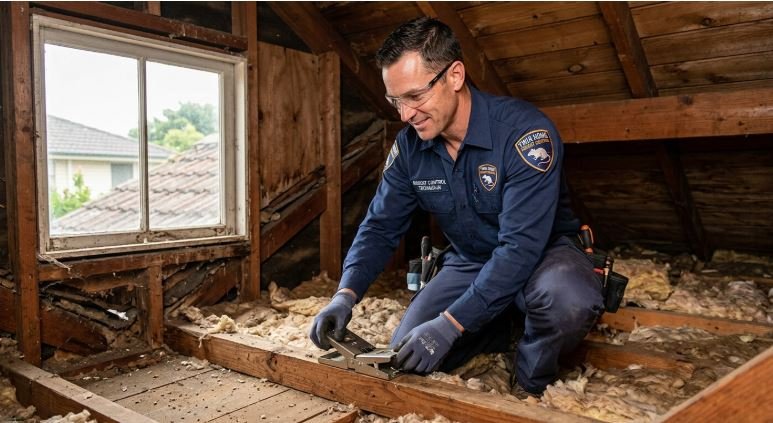
Getting rid of unwanted rodents for good starts with professional rat removal that targets the root of the problem rather than just the symptoms. At Twin Home Rodent Control, we specialize in inspecting homes for entry points, safely removing existing rats, and sealing up vulnerabilities so the problem doesn’t come back. Our approach focuses on long-term prevention, not just a quick fix that leaves the door open for round two.
Taking Back Control of Your Home
A rat infestation is unpleasant, but it’s also entirely manageable with the right approach. Catching the early signs—droppings, gnaw marks, strange noises, or that telltale musty smell—gives you a real head start before the problem multiplies.
If you’re noticing any of these warning signs in your own home, don’t wait for things to escalate. Reach out to Twin Home Rodent Control for an inspection and let our team help you reclaim a rodent-free living space.

