

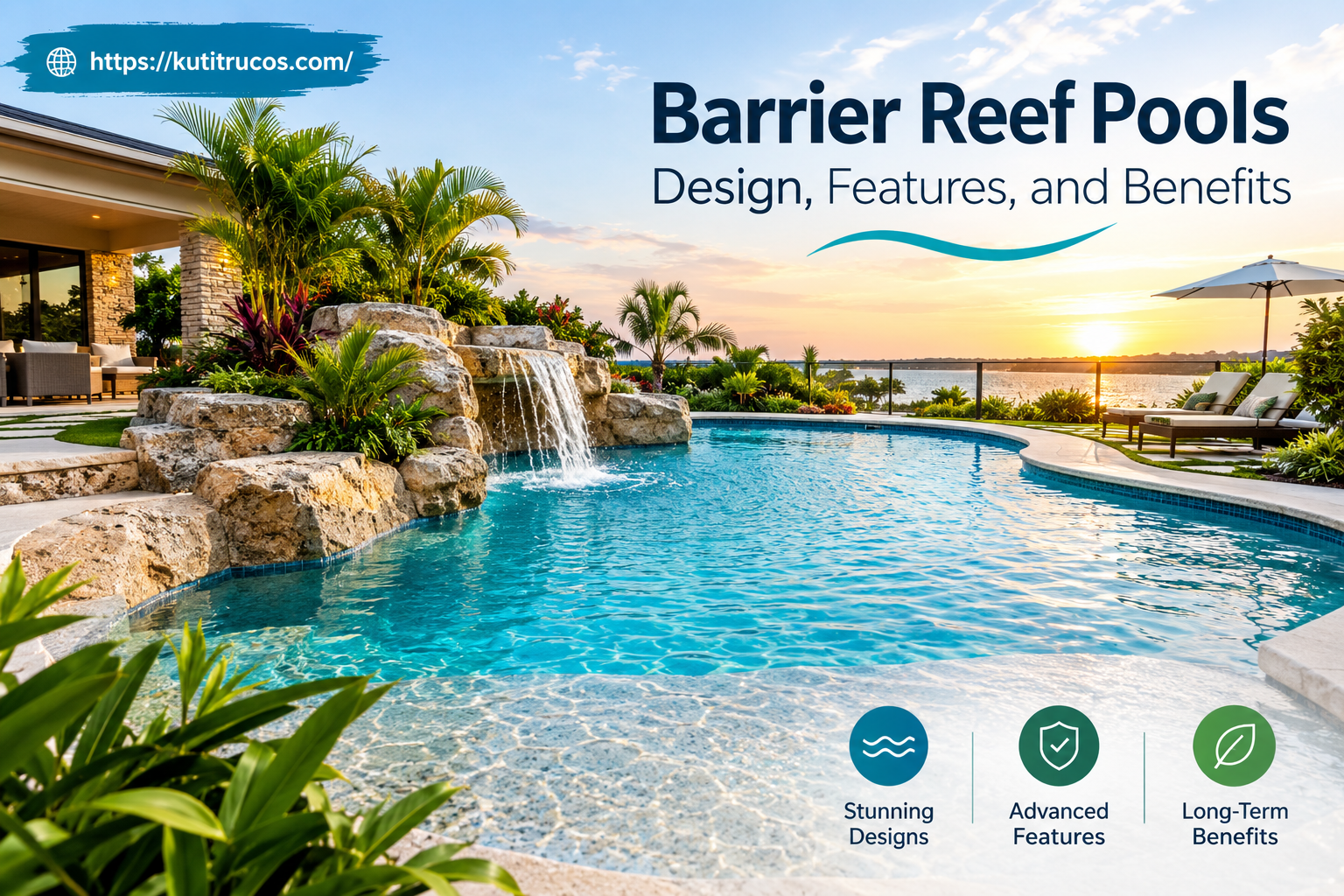
A swimming pool can completely change the way an outdoor space looks and feels. It can become a place for exercise, relaxation, family activities, entertaining guests, or simply enjoying a quiet afternoon outdoors. For homeowners considering an in-ground fiberglass pool, Barrier Reef Pools offers a wide range of designs, sizes, and finishes to suit different properties and lifestyles.
Barrier Reef Pools is an Australian fiberglass swimming pool manufacturer with a large collection of pool designs. Its current range includes options for small backyards, larger family spaces, plunge pools, lap pools, swim spas, and pool-and-spa combinations. The company currently lists more than 75 designs across its range.
Choosing a pool, however, involves more than selecting a shape that looks attractive. Homeowners also need to think about available space, pool depth, access, installation, maintenance, landscaping, safety, and long-term use.
This guide explores the main features of Barrier Reef Pools and explains what to consider when choosing a fiberglass pool for your outdoor space.
What Are Barrier Reef Pools?
Barrier Reef Pools specializes in fiberglass swimming pools designed for residential outdoor spaces. Fiberglass pools are manufactured as shells before being transported to the property for installation.
This construction method differs from traditional concrete pools, which are formed and finished at the installation site.
Barrier Reef Pools says its pools use a seven-layer construction system designed to provide structural strength, chemical resistance, and surface protection. The company’s construction information describes layers that include an interior surface finish, anti-corrosion barrier, structural layers, reinforcement, an outer core laminate, and an outer sealer coat.
The result is a pre-manufactured pool shell that can be installed after the site has been prepared.
Why Choose a Fiberglass Pool?
Fiberglass pools have become popular because they offer a combination of design flexibility, relatively straightforward installation, and a smooth finished surface.
Unlike a concrete pool that is built from the ground up at the property, a fiberglass pool arrives as a manufactured shell.
This can simplify certain aspects of the construction process. However, the exact installation time still depends on factors such as site conditions, excavation, access, local requirements, weather, and the complexity of the project.
Barrier Reef Pools says its in-ground fiberglass installations can vary according to the size and complexity of the project and provides a general installation timeframe of around two to four weeks on its information page.
A Wide Selection of Pool Designs
One of the biggest advantages of the Barrier Reef Pools range is the variety of available designs.
The company divides its pools into different categories, including small pools, medium pools, large pools, plunge pools, lap pools, spas, and swim spas.
This variety means homeowners do not necessarily need a huge backyard to consider a fiberglass pool.
Narrow designs can work in spaces where a traditional wide pool would be difficult to accommodate, while larger models can provide generous swimming and entertaining areas.
The most suitable design depends on the property’s dimensions and how the pool will be used.
Small Pools for Compact Backyards
Limited outdoor space does not automatically mean giving up the idea of having a pool.
Barrier Reef Pools offers several smaller and slimline designs intended for more compact areas.
For example, the Amalfi range includes models from approximately 4.2 to 8.2 metres long and 2.8 metres wide.
Slimline options can be particularly useful for narrow properties where homeowners want to preserve space for landscaping, seating, pathways, or outdoor entertaining.
Before choosing a model, it is important to measure the complete available area rather than looking only at the pool shell dimensions. Access, fencing, equipment, coping, landscaping, and required clearances may also influence the final layout.
Family-Friendly Pool Designs
For households looking for a pool that can accommodate multiple activities, larger models may provide more flexibility.
The Brooklyn range, for example, is designed as a family pool with an integrated spa and includes several size options. The current range includes models measuring up to approximately 12.1 metres long and 4.4 metres wide.
A larger pool can provide room for recreational swimming while also creating dedicated areas for relaxing.
However, a bigger pool also requires more space and can increase the requirements for installation, water management, cleaning, and ongoing maintenance.
The ideal size should therefore be based on actual use rather than choosing the biggest available option.
Plunge Pools for Smaller Spaces
Plunge pools have become increasingly popular for homeowners who want a compact place to cool down and relax.
Barrier Reef Pools offers plunge designs in several sizes. The Billabong Plunge range, for example, includes models up to approximately 6.5 metres long, while slimline options are available for particularly restricted spaces.
A plunge pool can work well when swimming laps is not the main priority.
Instead, it can provide a comfortable space for cooling off, relaxing, and enjoying the backyard.
The Indulgence Pool
Another option in the Barrier Reef Pools collection is the Indulgence.
The company describes it as a freeform fiberglass plunge pool designed for compact Australian backyards. Its curved shape provides an alternative to traditional rectangular designs and can complement landscaped outdoor areas.
The Indulgence measures approximately 7.4 metres by 3.45 metres and has a maximum listed depth of around 1.51 metres. It also includes entry steps and a continuous safety step ledge around the pool perimeter.
Its freeform shape may appeal to homeowners who want their pool to feel integrated with gardens and other landscaping rather than appearing completely geometric.
Lap Pools for Fitness
A swimming pool can also be used as part of a fitness routine.
For homeowners who enjoy swimming for exercise, a lap pool can be a practical option. Barrier Reef Pools currently lists lap pool designs, including an 8.3-metre and a 12.2-metre option, both with a 3.45-metre overall width and a 2.6-metre lane width.
A lap-style design can make better use of a long, narrow backyard than a wide recreational pool.
Before selecting one, consider whether the available property dimensions provide enough room around the pool for safe movement, fencing, landscaping, and access.
Pool Colors and Finishes
The pool’s interior color can have a significant effect on the overall appearance of the backyard.
Barrier Reef Pools offers a range of gelcoat colors, including shades such as Royal Ocean Shimmer, Pacific Shimmer, Sky Blue Shimmer, Silver Shimmer, Hampton Grey Shimmer, Midnight Shimmer, Royal Jade Shimmer, and Beach Shimmer.
Water color can appear different depending on sunlight, surrounding landscaping, shadows, and water movement. Because of this, a pool should not be selected solely from a small digital color sample.
Whenever possible, homeowners should view physical samples or completed installations before making a final decision.
Seven-Layer Pool Construction
Construction quality is one of the important considerations when purchasing a fiberglass pool.
Barrier Reef Pools states that its fiberglass shells use seven layers of construction. These layers are designed for different functions, including surface protection, corrosion resistance, structural support, reinforcement, and exterior protection.
The company’s construction information also highlights the use of vinyl ester resin and fiberglass reinforcement within its laminate structure.
For buyers, the broader lesson is important: when comparing fiberglass pools, do not evaluate them solely by appearance. Ask about the construction process, materials, warranty, installation requirements, and long-term maintenance.
Maintenance of Barrier Reef Pools
Even a low-maintenance pool still requires regular care.
Routine maintenance generally includes monitoring water chemistry, cleaning the pool, removing debris, checking equipment, and maintaining appropriate water levels.
Barrier Reef Pools’ own maintenance guidance recommends regular cleaning and water chemistry management as part of responsible fiberglass pool ownership.
Keeping the water balanced is particularly important because incorrect chemical levels can affect both the swimming experience and pool components.
Homeowners should follow the manufacturer’s recommended chemical ranges rather than adding chemicals based solely on guesswork.
Cleaning the Pool Surface
Leaves, insects, dirt, and other debris can accumulate in any outdoor pool.
Regular skimming can remove floating debris before it sinks. Pool walls and floors may also need brushing or cleaning as part of the maintenance routine.
Barrier Reef Pools advises using suitable cleaning methods and avoiding rough cleaning tools that could damage the fiberglass surface.
A consistent cleaning schedule is usually easier than waiting until the pool has accumulated significant dirt or algae.
Pool Safety Considerations
Safety should be part of the pool design from the beginning.
Fencing, gates, supervision, appropriate entry points, non-slip areas, lighting, and responsible pool use all contribute to a safer outdoor environment.
Local pool safety requirements vary by location, so homeowners should check the regulations that apply to their property before installation.
Features such as entry steps and safety ledges can also influence how a pool is used. For example, the Indulgence model includes non-slip entry steps and a continuous safety step ledge.
Safety should never be treated as an afterthought.
Planning the Installation
Before ordering a pool, carefully consider how the shell will reach the property.
Access is especially important for fiberglass pools because the manufactured shell must be transported to the installation location.
Narrow streets, fences, neighboring properties, overhead obstacles, slopes, and restricted access points can all affect installation planning.
A professional site assessment can identify potential issues before excavation begins.
Barrier Reef Pools describes its installation process as involving a quote, approval and local requirements, excavation and construction, followed by completion of the pool project.
The exact process can vary depending on the location and project.
Landscaping Around the Pool
A pool rarely exists in isolation. The surrounding landscape has a major effect on how the finished backyard looks.
Natural stone, paving, timber-look materials, gardens, outdoor furniture, lighting, and planting can all be used to create a cohesive environment.
For curved pool designs, softer landscaping can complement the organic shape. Rectangular pools may pair particularly well with contemporary paving and geometric garden layouts.
Leave enough practical space around the pool for movement and maintenance. A beautiful design should also remain functional.
Pool and Spa Combinations
For homeowners who want both swimming and relaxation features, a combined pool and spa design can be attractive.
The Brooklyn range is one example of a Barrier Reef design that integrates a spa with the pool in a single configuration. The company describes it as a family-oriented design combining swimming space, a lounging platform, and an integrated spa.
A combination can make efficient use of available space compared with installing completely separate features.
However, homeowners should consider the additional equipment, heating requirements, running costs, and maintenance involved with spa functionality.
How to Choose the Right Pool
Choosing a pool should begin with your property rather than a particular model.
Start by measuring the available outdoor area. Then consider how much room you need for fencing, access, equipment, seating, landscaping, and other features.
Next, think about how the pool will actually be used.
If swimming for fitness is important, a lap pool may make more sense. If relaxation is the priority, a plunge or freeform design may be more suitable.
For families who want a combination of recreation and relaxation, a larger pool or pool-and-spa configuration may be worth exploring.
Consider Long-Term Costs
The purchase price is only one part of pool ownership.
You should also consider excavation, installation, fencing, landscaping, pumps, filtration equipment, electricity, water treatment, cleaning supplies, repairs, and potential heating costs.
A larger pool may require more water and energy than a smaller one.
Likewise, additional features can increase both the initial investment and ongoing operating costs.
Creating a realistic budget before choosing a model can help prevent unexpected expenses later.
Are Barrier Reef Pools Worth Considering?
Barrier Reef Pools offers a broad selection of fiberglass pool designs, including compact, slimline, plunge, family, lap, and integrated pool-and-spa options. Its range also includes multiple color choices and different dimensions.
The company also highlights its seven-layer construction system and manufacturing experience.
Whether a specific pool is right for you depends on your property, budget, local installation conditions, desired features, and long-term plans.
Comparing several models and getting a professional site assessment is a sensible step before making a purchase.
Final Thoughts
Barrier Reef Pools provides homeowners with a broad selection of fiberglass pool designs that can accommodate different outdoor spaces and lifestyles. From narrow pools for compact properties to large family designs, plunge pools, lap pools, and pool-and-spa combinations, the range offers plenty of possibilities.
The most important part of choosing a pool is not simply finding the most attractive model. Consider the available space, installation access, intended use, maintenance requirements, safety features, landscaping, and long-term ownership costs.
A well-planned fiberglass pool can become much more than a backyard feature. It can create a dedicated space for exercise, relaxation, outdoor gatherings, and everyday enjoyment.
Take time to compare designs, understand the installation process, review warranty information, and discuss the project with an experienced local pool professional. With careful planning, you can choose a pool that complements both your property and the way you want to use your outdoor space.

