

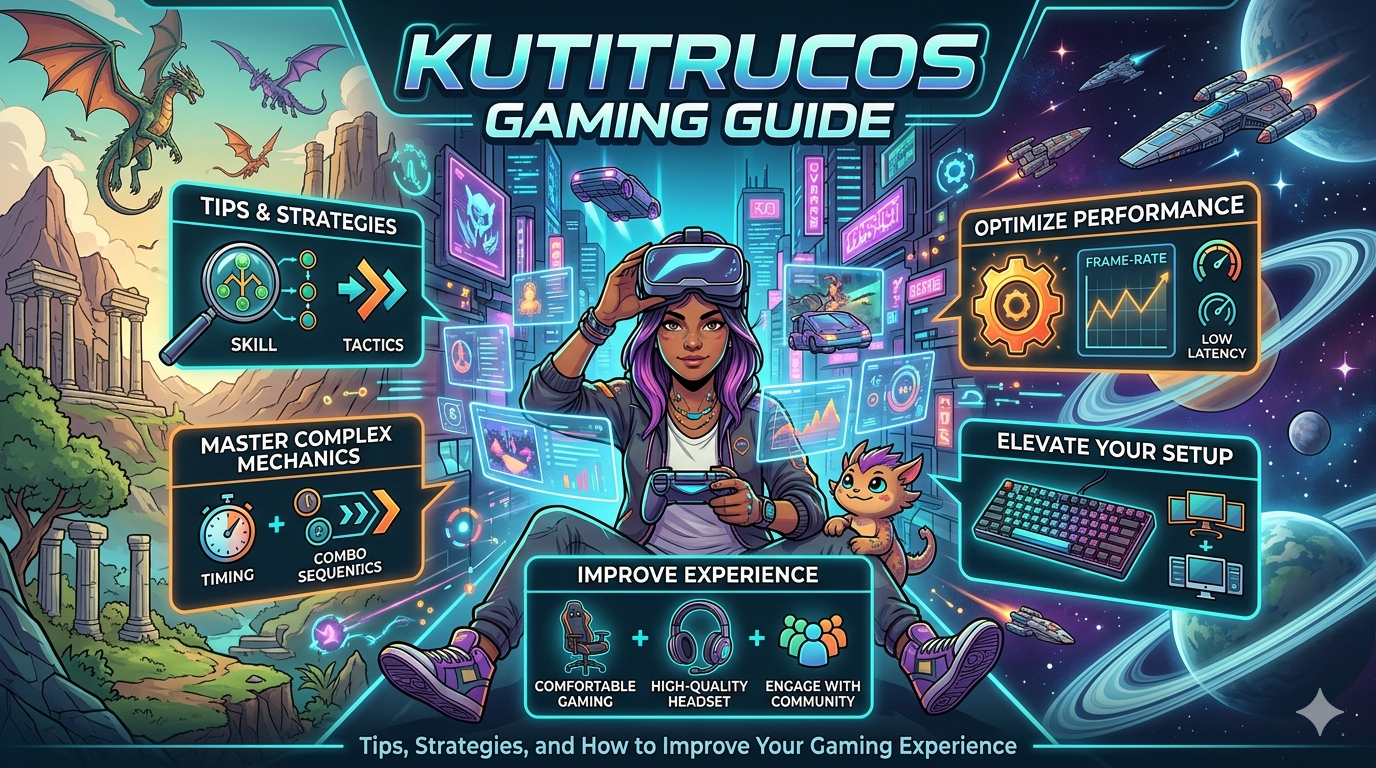
The gaming industry continues evolving rapidly, with players constantly searching for better strategies, improved performance, and more effective ways to enjoy their favorite titles. This is where the Kutitrucos gaming guide becomes useful as a concept focused on gaming tips, tricks, optimization methods, and player improvement strategies.
Whether you are a beginner trying to understand gaming fundamentals or an experienced player looking for advanced techniques, understanding how to improve gameplay can significantly enhance your overall experience.
This complete guide explores practical strategies, skill development methods, gaming optimization, and useful techniques that can help players improve regardless of genre or platform.
What Is a Gaming Guide and Why Does It Matter?
Gaming guides exist because modern games have become increasingly complex.
Players often search for guidance related to:
- Game mechanics
- Performance optimization
- Skill improvement
- Competitive strategies
- Progression systems
A well-structured gaming guide saves time and reduces frustration while helping players improve faster.
Understanding Different Types of Gamers
Not every player approaches games the same way.
Casual Players
These players focus primarily on entertainment and relaxation.
Common goals include:
- Enjoyment
- Story progression
- Social gaming
- Exploration
Competitive Players
Competitive gamers prioritize:
- Rankings
- Skill improvement
- Optimization
- Performance metrics
Content Creators
Some gamers focus on:
- Streaming
- Recording gameplay
- Community building
- Entertainment content
Understanding your player type helps identify better strategies.
Essential Gaming Skills Every Player Should Build
Improvement begins with fundamentals.
Game Awareness
Understanding what happens around you matters.
Awareness includes:
- Enemy movement
- Resource management
- Objective tracking
- Environmental understanding
Reaction Speed
Faster reactions often improve performance.
Ways to improve:
- Practice regularly
- Reduce distractions
- Improve setup comfort
- Optimize sensitivity settings
Decision Making
Good decisions often matter more than mechanical skill.
Strong decision-making includes:
- Risk assessment
- Timing choices
- Positioning decisions
- Resource usage
Beginner Tips for Faster Improvement
New players often improve faster when following structured habits.
Learn Core Mechanics First
Do not immediately focus on advanced techniques.
Master:
- Controls
- Movement
- Objectives
- Basic mechanics
Practice Consistently
Small sessions performed regularly work better than rare long sessions.
Watch Better Players
Observation helps identify mistakes.
Avoid Information Overload
Learning everything at once slows progress.
Advanced Gaming Strategies
Experienced players often focus on optimization.
Study Patterns
Many games reward prediction.
Watch for:
- Enemy behavior
- Resource timing
- Repeated mistakes
- Common strategies
Positioning Matters
Better positioning often creates advantages.
Good positioning improves:
- Visibility
- Survival
- Resource access
- Objective control
Analyze Your Gameplay
Reviewing mistakes accelerates improvement.
Questions to ask:
- What caused failure?
- What could improve?
- Was decision-making correct?
Optimizing Your Gaming Setup
Hardware does not replace skill but can improve comfort.
Display Settings
Proper settings improve visibility.
Focus on:
- Resolution
- Frame rates
- Refresh rates
Input Devices
Choose equipment that feels comfortable.
Examples include:
- Mouse sensitivity
- Controller layout
- Keyboard configuration
Comfortable Environment
Long gaming sessions require:
- Good posture
- Proper lighting
- Comfortable seating
Common Mistakes Players Make
Avoiding mistakes often improves faster than learning advanced skills.
Playing Without Goals
Practice should have purpose.
Ignoring Fundamentals
Advanced techniques cannot replace basics.
Blaming Equipment
Skill development usually matters more.
Changing Settings Constantly
Frequent changes reduce consistency.
Multiplayer Gaming Tips
Multiplayer environments require additional skills.
Communication
Good communication improves teamwork.
Adaptability
Different opponents require different strategies.
Patience
Not every match goes perfectly.
Team Awareness
Understanding teammates creates advantages.
How Mental Performance Affects Gaming
Many players ignore psychology.
Important factors include:
Focus
Concentration improves decision quality.
Confidence
Confidence supports better execution.
Stress Management
Stress negatively affects performance.
Rest
Fatigue reduces reaction speed.
Mental performance often separates average players from strong players.
The Role of Practice
Effective practice includes:
- Repetition
- Feedback
- Goal setting
- Progress tracking
Random play is not always practice.
Structured improvement usually creates faster results.
Why Community Learning Matters
Gaming communities provide:
- Strategies
- Tips
- Problem solving
- Updates
Learning from others reduces trial-and-error.
Balancing Fun and Competition
Many players focus too heavily on winning.
Healthy gaming should include:
- Enjoyment
- Learning
- Social interaction
- Progress
Balance improves long-term motivation.
Gaming Trends Changing Modern Play
Modern gaming continues evolving through:
Cross-Platform Play
More players connect together.
Competitive Growth
Esports continues expanding.
Content Creation
Streaming influences game popularity.
Frequent Updates
Games evolve more quickly than before.
Players who adapt often improve faster.
Future of Gaming Guides
Gaming guides continue growing because:
- Games become more complex
- Competition increases
- Players seek efficiency
- Communities expand
Educational gaming content will likely remain important.
Final Thoughts
The purpose of a Kutitrucos gaming guide is not simply to provide shortcuts—it is to help players understand systems, improve performance, and enjoy gaming more effectively.
Improvement usually comes from:
- Consistency
- Practice
- Better decision making
- Learning from mistakes
- Maintaining enjoyment
Regardless of skill level, every player can improve through structured learning.
Conclusion
Gaming success is rarely about talent alone. Most improvement comes through repetition, strategy, patience, and smart decision making.
By applying the tips and techniques discussed in this guide, players can build stronger habits, improve performance, and create better gaming experiences.
Whether you play casually or competitively, using a structured approach can transform the way you experience games and help you continue progressing over time.

