A floor does more than hold up furniture. It sets the tone for a room, tells visitors something about the people who live there, and quietly absorbs years of daily life — footsteps, spills, and everything in between. That’s a lot of pressure for a surface most of us barely think about until it starts cracking or looking dated.
Roma Tile of New York has spent years helping homeowners and business owners across Long Island put that pressure to good use. Instead of settling for flooring that merely functions, clients walk away with surfaces that hold their shine, resist wear, and genuinely elevate the spaces around them. Whether the project involves a cramped powder room or a sprawling commercial lobby, the approach stays the same: precise measurements, honest material recommendations, and installation work that doesn’t cut corners.
This post walks through what Roma Tile of New York actually does, the materials worth considering for different rooms, and why so many clients come back for a second or third project.
What Services Does Roma Tile of New York Offer?
Roma Tile of New York handles tile work from start to finish, which means clients don’t need to juggle multiple contractors or guess who’s responsible for what. The core services include:
- Custom tile installation for kitchens, bathrooms, entryways, and outdoor living spaces
- Tile removal and replacement, including careful demolition that protects subfloors
- Natural stone and porcelain sourcing, with guidance on which materials suit specific rooms and budgets
- Grout repair and resealing, which extends the life of existing tile without a full replacement
- Commercial tiling projects, from retail storefronts to restaurant kitchens that need slip-resistant surfaces
Because the team manages every stage, from initial consultation to final cleanup, homeowners get a single point of contact rather than a revolving door of subcontractors.
Why Material Choice Matters More Than People Realize
Picking a tile often comes down to color and pattern, but the material underneath those looks determines how the floor performs for the next decade or more.
Porcelain tile, for instance, tends to be the better fit for high-traffic areas like kitchens and entryways. It’s denser than standard ceramic, which makes it more resistant to chips and moisture. Natural stone, such as marble or travertine, brings a softer, more organic texture that works beautifully in bathrooms and accent walls, though it typically requires sealing to guard against staining.
Choose porcelain if durability and low maintenance top the priority list. Choose natural stone if the goal is a one-of-a-kind aesthetic and there’s willingness to handle periodic sealing. Roma Tile of New York walks clients through these trade-offs before a single tile gets ordered, which saves money and disappointment down the road.
How Does the Installation Process Actually Work?
Good tile work is mostly invisible — nobody admires the subfloor prep or the precision of the spacing. But those unseen steps are what separate a floor that lasts fifteen years from one that needs attention after three.
The process typically starts with an on-site consultation, where measurements are taken and the existing subfloor is inspected for moisture, unevenness, or structural concerns. Any necessary repairs happen before tile ever touches the ground. From there, layout planning ensures cuts fall in logical places rather than leaving awkward slivers near walls or cabinets.
Once installation begins, attention to spacing, leveling, and adhesive curing time makes the difference between tiles that stay put and ones that shift or crack within a year. Grouting and sealing follow, and a final walkthrough confirms everything meets the standard both the client and the team expect.
Bathroom and Kitchen Tiling: Where Small Details Make a Big Difference
Bathrooms and kitchens see more daily wear than almost any other room in the house, which makes tile selection and placement especially important there.
In bathrooms, slip resistance matters as much as style. Textured porcelain or matte-finish tile reduces the risk of slipping near showers and tubs, while still offering plenty of color and pattern options. Kitchens benefit from tile that resists staining from oil, sauce splatters, and dropped utensils — glazed porcelain handles that kind of abuse without losing its finish.
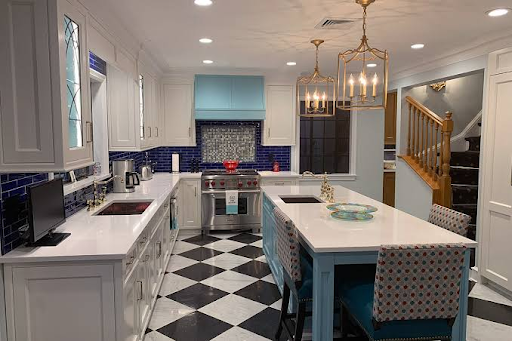
Backsplashes offer a chance to get a little more adventurous. Smaller mosaic tiles, textured subway patterns, or even bold color contrasts can turn a kitchen into a genuine focal point without requiring a full renovation budget.
What Should Long Island Homeowners Know Before Starting a Tiling Project?
Before any renovation gets underway, it helps to understand what drives cost, timeline, and long-term satisfaction with the results.
Timeline expectations vary depending on room size and material. A standard bathroom floor might take two to three days from start to finish, while larger commercial projects or intricate stone patterns can stretch to a couple of weeks. Weather and humidity on Long Island can also affect curing times for certain adhesives, so scheduling with some flexibility tends to pay off.
Budget conversations should happen early and honestly. Material costs vary widely — ceramic tends to be the most affordable option, while natural stone and specialty porcelain sit at the higher end. A trusted tiling company Long Island residents can count on for straightforward pricing and durable results makes this part of the process far less stressful, since surprises tend to come from unclear estimates rather than the actual installation work.
Homeowners should also ask about warranties on labor, not just materials. A contractor confident in their work will stand behind the installation itself, not just the tile that gets installed.
Ready to Upgrade Your Space?
Tile might be one of the last things people think about when picturing their dream kitchen or bathroom, but it’s often the detail that pulls the whole room together. Roma Tile of New York brings the technical know-how and material expertise needed to make that happen, without the guesswork that so often comes with home renovation projects.
Anyone considering a tiling project on Long Island, whether it’s a single bathroom refresh or a full commercial buildout, can reach out to Roma Tile of New York for a consultation. The right floor is closer than it might seem.