A neighbor asked me recently which online trading platform she should use. She had a small sum put aside and a vague plan to learn. I told her the platform was the last question, not the first. Opening an account takes minutes, while the checks before it take an evening.
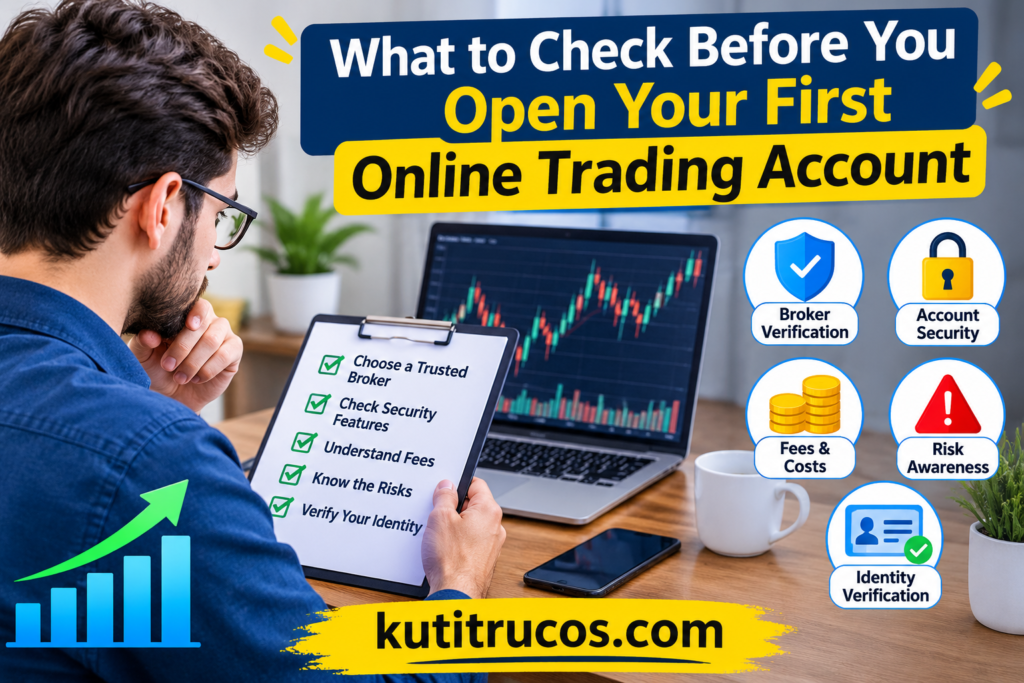
Here is the checklist I gave her, in order. It runs from the money you can afford to lose through account types, the demo, fees and withdrawals to the client documents. You can lose money fast when you trade, up to your whole deposit, and leverage speeds that up.
Know What You Can Afford to Lose
The first item has nothing to do with brokers. Look at your month and find a sum whose loss would not touch rent, food, school fees or your emergency fund. That number, not a minimum deposit, sets the size of a first account. If the honest answer is very little, start with very little.
Write the figure down and tell someone at home. A number spoken to another person is harder to stretch after a bad week. I also set a second figure, the level at which I stop and review, well before the account is empty. Both come before any search for an online broker.
Account Types and What You Actually Own
Most brokers offer more than one account type, and the differences hide in small print: which markets each one reaches, whether leverage is on by default, which extras come attached. Read the comparison page line by line. If there isn’t one, ask support to put the differences in writing.
Then check what you would actually hold. Some products follow the price of a share or a commodity without giving you the asset: no shareholder vote, and nothing you could move to another broker. That is not wrong in itself, but it is a different deal from owning shares, so find out which one you are getting.
What the Demo Account Is For
A demo account is a rehearsal for the platform, not for your talent. Most brokers have one, and at 123 Broker the demo trading account is where I would start before touching its CFDs with leverage. On a demo I learn how margin is shown, where the spread sits on the ticket and how a closed trade looks in the history.
Give it a fixed period, say two weeks, and a written task list. A demo cannot show how you react when a loss comes out of your own money, and practice orders often fill more neatly than live ones in a fast market. A good demo result proves you know the controls, nothing more.
Read the Fee Schedule, Not the Banner
Advertising shows the cheapest number a broker can find. The fee schedule shows the rest: the spread, any commission, overnight financing on leveraged positions, currency conversion and charges for inactivity or withdrawals. Ask for the full document rather than a summary page, and save a dated copy.
Next, price one ordinary trade in words. Suppose you buy, hold for three nights and sell: you pay the spread on the way in, financing for each night and perhaps a withdrawal fee. Add those together and set the total against your balance. On a small account, costs can swallow a decent trade.
Test a Withdrawal Before You Need One
Deposits are usually instant, because brokers want them to be. Withdrawals show how the process really works. Before putting in more than a token amount, I read the payment policy for three things: which methods accept withdrawals, whether money must go back by the route it came in, and how long processing takes.
After reading it, I move a small amount in and back out while the stakes are low. Identity checks often happen at this point, so keep your documents ready. A test withdrawal that stalls without a clear reason tells you more than any review. Better to learn it with a small sum than with savings.
The Client Documents Deserve an Evening
A broker should publish a full set of client documents, usually linked in the site footer. The client agreement sets the rules, the risk disclosure lists what can go wrong, and the privacy policy explains what happens to your data. They are long, but they are what you agree to.
I read them with a pen, looking for clauses that cost money: how the broker can change its terms, when it may close positions without asking, what happens to an idle account and how complaints are handled. Anything unclear goes into an email to support. Keep the written answer with the documents.
One Last Look Before the Deposit
Before the full deposit, I run through the list once more. Is the amount still one I can lose? Do I know what my account type holds? Have I priced a normal trade, made a test withdrawal and read the documents? A single no means the deposit waits.
None of this makes trading less risky. CFDs with leverage and stock tokens are complex derivatives, and you can lose part or all of the money you deposit. The checklist only makes sure the risk you take is the one you chose. For a first account, that is a sensible goal.