Pressure injury prevention is often described as a turning schedule on a clipboard. In practice, it happens across an entire day, woven into bathing, meals, activities, and sleep. For residents of intermediate care facilities who cannot change position on their own, every routine task is a chance to protect skin or a moment when damage can begin unnoticed. Following a resident from morning to night shows where prevention fits naturally.
Morning Care and Skin Checks
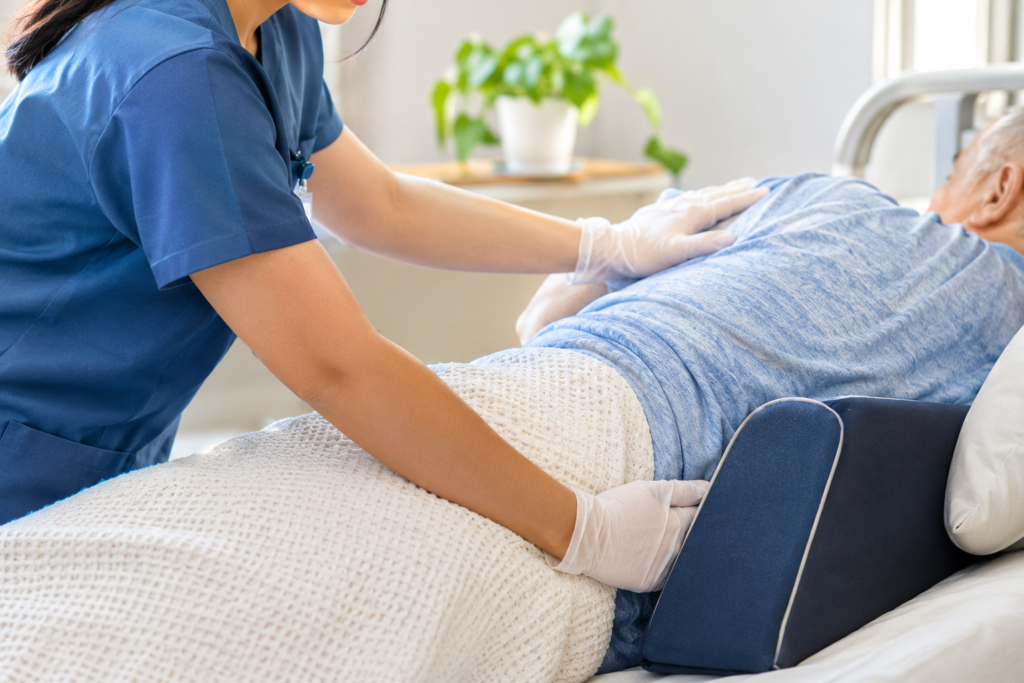
The first hours of the day bring hygiene, dressing, and the most thorough look at the skin. Overnight pressure tends to show up as redness over the hips, heels, and tailbone, and spotting it early allows staff to adjust before a wound forms. Tilting a resident to one side on a powered platform gives clear sight lines for inspection and cleaning without rolling the body by hand. Keeping skin clean and dry at this stage matters, since moisture softens tissue and makes it easier to injure.
Meals, Medication, and Upright Angles
Feeding and medication call for a raised upper body, which lowers the risk of choking and aspiration. Angling the platform from head to toe brings the resident into a safe position in seconds, and a detachable tray holds plates, cups, or therapy materials within reach. Feeding tubes and IV lines stay secure through straps and pole attachments built to work around them. Facilities shaping their approach to Wound Care Prevention for Intermediate Care Facilities (ICF/IID) often treat mealtime as a repositioning opportunity, since the shift in angle moves pressure away from areas that bore weight overnight. Small changes repeated throughout the day add up to meaningful relief.
Afternoons Out of the Room
Residents who spend all day in bed miss out on the social contact that supports mental health. A mobile positioning platform on rolling casters can move through hallways and doorways, with shock absorbers smoothing the ride over thresholds. That mobility lets residents join group activities, music sessions, or time near a window. Raising the platform to eye level makes conversation with staff and peers feel natural, and residents who communicate through expressions and gestures can be seen and understood more easily.
Evening Rest and Overnight Turns
Night shifts usually run with fewer staff, which makes manual turning harder to sustain. Motorized side tilting reduces the physical effort of each turn, so caregivers can keep pace with repositioning schedules without risking their own backs and shoulders. A frame-mounted resting rail adds security when a resident sleeps on the platform, and a layered memory foam surface spreads weight through the long overnight hours.
Prevention works best as a rhythm rather than a single task. When skin checks, mealtime angles, social time, and overnight turns all support pressure relief, residents stay healthier and caregivers carry a lighter physical load.